
The time stamp indicates it’s been two years since I last conveyed thoughts via this blog, and life circumstances seem to suggest it would be OK to try to resume the activity. Thanks in advance for your consideration.
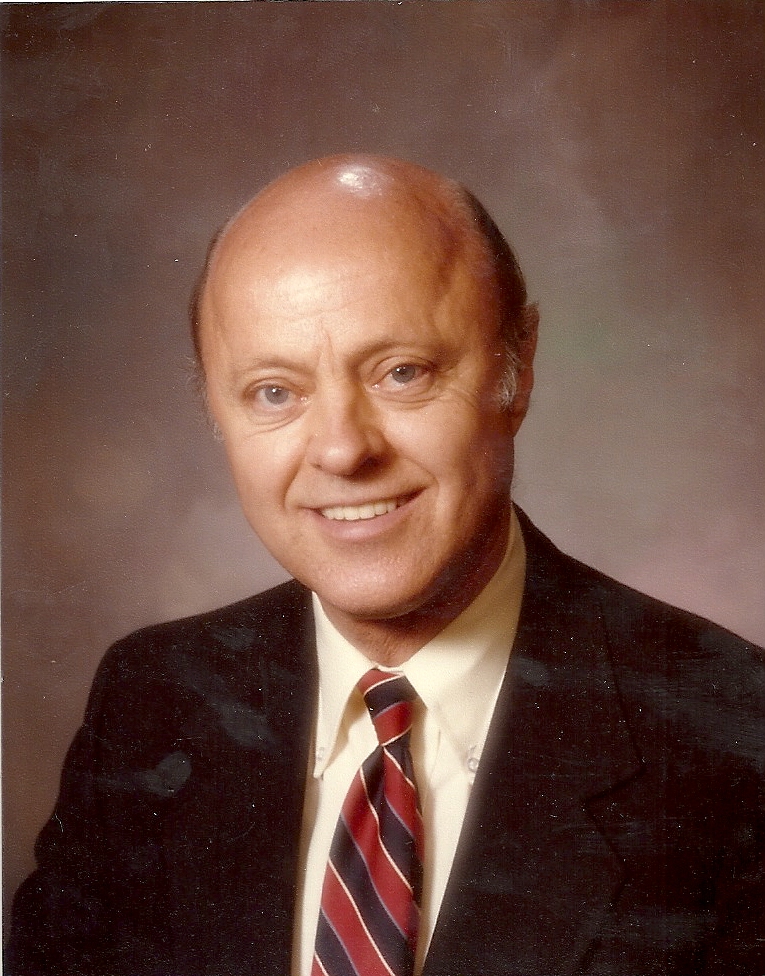
I’m motivated by a number of things (e.g., I’ve missed writing on topics about which I feel passionately), not the least of which is the 50th anniversary this year of my father’s TV show, Man and His Music, which aired on Cincinnati’s PBS affiliate, WCET. Dad taught a host of music classes for over 40 years at the University of Cincinnati’s College-Conservatory of Music, but his Music Appreciation and History of Jazz and Popular Music were his bread-and-butter classes, often featuring as many as 600 students enrolled each trimester. Those classes became popular quickly, earning the top “5 Cakes” rating from the campus paper one year (an easy class that was well worth taking), and athletes in particular gravitated to them; Dad taught a number of future NBA players over the years, including Pat Cummings, Nick Van Exel, and Kenyon Martin, among several others. At the time of Dad’s retirement, the University honored him by endowing an award to be given each year to the faculty member who most demonstrated support for the academic endeavors of student athletes. (I’m glad to see the Dr. Simon Anderson Faculty Award is still being offered at UC. Congrats to Prof. Evan Griffin, this year’s recipient.)
To broaden his classes’ appeal, Dad connected with the producers at WCET and came up with what amounted to an initial foray into distance learning, a concept just getting off the ground at the time, one which now manifests itself as online education. Back then, the students had to watch the half-hour TV show, listen to music examples provided by the campus radio station, and attend a final exam in Wilson Auditorium, pictured early in the show, where I took the class when I was a student at UC. (Wilson has since been demolished.)
Over the course of the summer and into the fall, I plan to feature each of the 10 episodes of Man and His Music and the 10 from the follow-up program, Pop Music, U.S.A. In these shows, you get a glimpse of what made Dad such a hit with students, his unbridled enthusiasm for his subject as played out in numerous academically sound but thoroughly entertaining ways. Fifty years is a long time, so the production values are often a hoot, with Pong-like graphics and other MST3K-type lo-fi examples of what was cutting edge at the time. Cultural values have certainly changed, too, in 50 years; were he alive today and embarking on such an endeavor, Dad would no doubt phrase some things a bit differently in his presentations. Be that as it may, these shows are snap shots of an era in time that set my father’s academic career on a new trajectory and, by extension as I reflected back on that time, shaped wide swaths of my approach to higher education in the process.
Episode one of Man and His Music, “Magnificant Varieties of Music,” encapsulates so much of Dad’s approach to music appreciation. We hear him discuss three new perspectives that help open up new worlds for folks beginning to think about the role music plays in our lives. If you take the time to watch, note the following gems:
- The new anthropolgical perspective: Dad’s look at the uniqueness of Western harmony and how rhythm in American popular music is rooted in our particular understanding of time
- The new sociological perspective: His deeming the NBA America’s true ballet and likening TV ads to hieroglyphics (by the way, I’m the eight-year-old son he mentions in this section)
- The new aesthetic perspective: His description of the typical American dream scenario, whereby the eager wannabe business tycoon moves up the ladder from success to success to success to . . . “coronary thrombosis . . . death.”
Just watching this first episode again (I’ve seen each of the shows a few times before, of course) brought back so many wonderful memories. About two-thirds of the way through this episode, when he sits down to play “I Left My Heart in San Francisco” to illustrate climax-and-release elements at work in pop songs derived from Broadway, I couldn’t help but tear up a bit. His discussing of what’s going on in the piece and then, especially, his popping off the high E-flat (“ho-o-o-o-o-me to you”) at the song’s moment of truth, head back and arms outstretched, are sweet reminders of so much of his instruction to me (and thousands of UC students) over the years.
I hope you enjoy these blasts from the past. Thanks to so many who have kept Dad’s voice alive over the years, but especially to Dr. Gerard Aloisio, at Minnesota State University-Mankato, and Drs. Josh Jones and Robert Kania, at Judson University (Elgin, Ill.), for using his material for so many years. Thanks also to my my sister and brother-in-law, Dr. Karin Anderson Abrell and Dan Abrell, for running Dad’s publishing company, Clifton Hills Press, for the past several years, and publishing his two books, The Musical Imperative and Pop Music, U.S.A. Additional thanks to Prof. Tim May, Judson University, for his assistance in making these TV shows blog-ready.
Without further ado, “The Magnificent Varieties of Music.”

 Emmaus Road Worshipers