
This is post number 35 in a series of random reflections I have been amassing over the past couple of years since retiring from steady, local-church, “weekend warrior” worship ministry. These ruminations are in no particular order, and they vary in significance. I welcome discussion on any of them.
Reflection #35: There is no ideal place to put announcements in worship services, but, if you must have announcements, consider placing them at the end of the service.
I am now two-and-a-half years into an extended period of visiting churches around Chicagoland, what I have called “The Worship Leader Roadshow” in the Twittersphere. And I have been collecting random observations along the way, delivering them to cyberspace via this blog. One constant–across churches of different sizes and denominations–I’ve observed is that there is no good place to put the weekly announcements.
 Gather any group of worship leaders together, and eventually this subject comes up. Some advocate for putting the announcements at the front of the service, before anything of greater substance transpires, but most end up admitting they make their way into the middle of the service somewhere, interrupting the flow and stifling momentum. (As a staff member at several churches, I heard–more than once–that the announcements couldn’t be at the very beginning of the service because too many parishioners walked in late, and they would miss the important information.) And even in this day and age of multiple information streams (websites, e-mail distribution lists, text alerts, Facebook), most of us still feel the need to take up valuable time in the midst of corporate worship articulating that which is readily available in numerous other locales.
Very few evangelical churches pursuing contemporary worship consider placing the announcements at the end of the service, but that, in my opinion, is the best place for them. (Most Catholic churches I have attended over the years, put them there.) Here are two reasons why:
Placing announcements at the end of the worship service gives greater emphasis to the final element of the traditional four-fold worship pattern, sending. In this model, we are gathered, we are led to experience Word and Table, and finally we are sent. (I use the passive voice for this sentence to underscore the important roles played by worship facilitators.) Sent to do what? In part, we are sent to fulfill the mission of the Church, generally speaking, and the church, specifically speaking. The latter includes all the things that typically fill the time allotted for giving announcements: VBS, mission committee meetings, soup-kettle ministry, and a host of other worthy pursuits. “Go and be the Church” exhortations/benedictions at the end of the service are natural spots for weekly announcements.
Placing announcements at the end of the worship service allows us to lead with our best stuff. Journalists employ this concept routinely, and around newsrooms you’ll hear encouragement given not to “bury the lead” somewhere in the middle of your article. My card-playing grandmother felt the same way, when during a game of Sheepshead, she’d throw the highest queen (i.e., highest trump card) she had while proclaiming, “Swing from the top!” In similar fashion, relegating announcements to the end of the service puts them in their proper place, allowing significantly more important worship content to fill spaces of higher importance. (When bookended with scrolling advertisements on the screens as people walk in, announcements made during the dismissal get highlighted twice.)
I have no ridiculous notions that end-of-service announcements will become the norm for contemporary American evangelical churches. Too many constituents have what they perceive to be too much at stake to alter drastically de facto service orders, and too many worship pastors/leaders have too many other important battles to fight to die on this hill by themselves. If senior church leadership can’t support worship leaders’ efforts to move what some would consider non-essential necessary evils out of the limelight, it’s not going to happen. Is it the end of the world if announcements stay where most of us have them these days? No, but any church that purports to place high value on corporate worship would do well to consider options that might make a few folks unhappy in order to pursue the greater corporate good.
The Lord be with you!
Coming next week (Lord willing): the importance of sacred space for contemporary worship.
 end of the concert, an opportunity for audience members to come forward to speak with counselors for any number of worthwhile reasons–to accept Jesus as Savior and Lord, to rededicate lives to the Kingdom’s service, to receive prayer, etc. No problem there; I’m all in favor of ccm bands providing space for folks moved by the Holy Spirit to respond to those stirrings. But immediately after extending the invitation (to which several people responded), the band launched into the loudest song of the evening–an unmitigated, guitar-wailing, drummer’s-arms-flailing, full-frontal assault on the ears . . . which rendered any attempts at intimate conversation (i.e., the kind you’d expect to accompany requests for prayer) futile. The image embedded in my mind’s eye is that of a well-intended counselor shouting her prayer into the ear of the supplicant, who is leaning in to hear while covering her other ear with her hand.
 My recollection here is ordered intentionally, for the musical elements (instrumental, choral, and congregational) always were woven in and around all the rest. The only time this church–and we were typical for that era–used anything resembling t
 Marva Dawn, in her excellent collection of sermons and essays A Royal “Waste” of Time: The Splendor of Worshiping God and Being Church for the World, addresses the benefits of encouraging children to be part of every aspect of our services in a series of 10 responses she gives to children who complain about having to go to church. Here are the ones that support this blog the best:
 special find is
  The lighting director’s version of the Hippocratic Oath says, “First, do not distract.” Good worship leaders know that any oohing and aahing that emanates from the congregation needs to be in response to truths about God, not flashy light cues (or anything else, like guitar solos, we do in worship). At all costs, we want to eschew that which might, in the words of Trinity Evangelical Divinity School Professor D.A. Carson in Worship by the Book, tempt us to
  worship at the college level, to hold the above opinion. That doesn’t mean it’s not accurate–especially when there are churches advertising for worship leaders using the following rhetoric (quoted verbatim, without edits, from a job-search website a former student of mine sent to me):
 Today’s post comes in the form of a (slighted edited) response to one of my former students, a wonderful, thoughtful worship leader who honestly wants to do well by both her Lord and her congregation. In essence, she asked what to do with popular cwm songs that contain lyrics that some consider theologically problematic. Here’s what I suggested to her.
 worship probably sang modernized familiar hymns that added a bridge. My memory’s ear tells me that Chris Tomlin’s “The Wonderful Cross,” released in 2001, was the first song in the most recent era of contemporary worship music to do this at a level that gained national exposure and acceptance. Countless others have followed (our family experienced a variation on “Crown Him with Many Crowns” Easter Sunday), and we get a similar experience at Christmas each year, with one of my favorite worship leaders, Paul Baloche, doing numerous honors here.
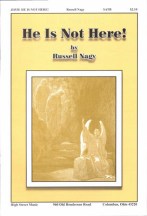 I hope all reading this had a blessed Easter, a blessed Resurrection Sunday yesterday. To allow the celebration to linger just a bit, this week’s blog post features a wonderful, neo-classical choral piece the Judson University Choir sang a few years back entitled “He Is Not Here!” by Russell Nagy. Be blessed!
 OK. This one is something of a no-brainer. Most churches are hip to the concept. Indeed, an observation I’ve made in this season of life where I’m visiting numerous churches frequently is this: Few are the churches, even small churches, without some kind of presentational technology that allows them to project congregational song lyrics, pull up stuff from the Internet, and play videos. But just to encourage those remaining churches that haven’t made this step yet and–probably more importantly–to remind those that did long ago why video technology is important, here are some random reasons why the contemporary American Church should be using video technology regularly, if judiciously.
 Emmaus Road Worshipers