
This is post number 26 in a series of random reflections I have been amassing over the past couple of years since retiring from steady, local-church, “weekend warrior” worship ministry. These ruminations are in no particular order, and they vary in significance. I welcome discussion on any of them.
Reflection #26: Churches do well to acknowledge that the giving of tithes and offerings is an important part of our overall corporate worship.
A book that is rearranging how my family and I understand and use technology is Andy 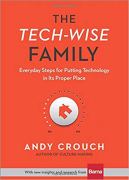 Crouch’s The Tech-Wise Family: Everyday Steps for Putting Technology in Its Proper Place. I can’t recommend it highly enough. The vast majority of us (everyone but the Amish) are so caught up in gadgets and gizmos that (purport to) make our lives easier, we need periodically to step back and assess the situation. What is the price we are paying for all this simplicity? Is life really simpler with this technology? What does all this convenience do to our souls? What Would Jesus Do with a smartphone? Would He even own one?
A tangential question that comes out of this for worship leaders of late is, How do we best collect the offering in the day of online giving, Google Pay, and Venmo? Clearly, more and more parishioners give online; a concept that would have felt Jetsons-like only a decade or so ago is now commonplace. I imagine studies eventually will show that folks who give online give more regularly and give greater sums when they do. More regular giving of greater offerings is good, but is minimizing the act of physically giving in corporate worship bad?
In our visits to numerous churches in the northwest Chicago suburbs, my wife and I have encountered almost as many ways to collect the offering as we have churches. Rare is the church anymore that brings ushers to the front of the church, who wait for a pastoral prayer of blessing for the offering and then collect cash and checks, row by row, while musicians play an offertory or “special music.” It still happens, of course, but not all that often in churches pursuing contemporary worship.
Instead, we have seen churches that practice weekly Eucharist put a basket by the elements, and those coming forward to eat at the Lord’s Table drop their offerings into that basket. Other churches indicate, usually from the pulpit (although not always), that there are baskets in the back of the sanctuary where people can deposit their offering envelopes. While these methods get the basic job done–collecting the people’s gifts–they don’t often allow for any understanding of the worship involved in bringing a portion of that which God has blessed you–bringing your “whole tithe into the storehouse,” as Malachi describes it–to return to Him each week.
Certainly the job of worship education vis-à-vis the offering is more difficult these days, but I like the way one church we attend fairly regularly has decided to tackle this conundrum. This church, with a strongly upper-middle class congregation, probably receives more online giving than most, yet they still bring ushers forward to receive the weekly gifts, row by row, where we all pass the bags to the end of the aisle . . . even though a solid half of the attendees probably don’t put anything at all in those bags because they went online and gave the previous payday.
More often than not, as the ushers are making their way down the aisles, the worship leader asks the congregation to pray together a prayer that functions as both sacred liturgical action (the prayer before the receiving of tithes and offerings) and worship education for congregants. After the prayer, and while the ushers are passing the bags, the congregation sings a song corporately, often one that somehow relates to giving, Christ’s for us (kenosis) or ours to God (out of gratitude).
Here are three prayers that we have prayed prior to the collection of the offering in the past several months at this church:
God, You are the maker and owner of everything. We give you this portion of our income, but even what we keep belongs to You–our time and energy, our gifts and resources, our heart and mind. It is all Yours. Amen.
God, we give because we want You to use these gifts to change lives. May the lonely find a home. May the broken be made whole. May the condemned be forgiven. May the weak be made strong. May the good news of Your kingdom be heard near and far. Amen.
God, we give because You have given us the most exciting mission in the world. Do not let our gifts go to waste! Use them to make passionate disciples who are belonging, growing, serving, and reaching. Amen.
Nothing too theologically profound here, but good reminders of why we bring a portion of our income to church and give it to God. With our current technology, the strategy this church uses–corporate prayers that help us appreciate the theological essence of the offering–is an important one, especially for those who aren’t body-physical worshipers on Sunday morning because they were mouse-click worshipers earlier that week.
However you decide to navigate this interesting issue, the Lord be with you!
Coming next week, Lord willing: The use of videos in worship.
 Last week, I had the distinct privilege of contributing to “The Common Good,” a radio show produced in Chicagoland by WYLL, which features two hours of interesting reflections, opinions, and general musings about life, the Church, faith, and whatever else comes, often-unfiltered, to the minds of the hosts, Brian From and Ian Simkins, both Chicago-area pastors. The latter, a former student of mine at Judson University, has been a friend for 20 years, and some of the most enriching, life-giving conversations I’ve ever had have come while noshing on an omelet or steak and eggs or a meat-lover’s skillet across the table from him. While Brian was on vacation, Ian invited a bunch of his friends to come and fill some air time, and I thought for this week’s blog post, I would simply link the 36-minute conversation for your consideration, since each of the four segments had its genesis in something written in the past year in this blog space. If you’ve read any of this blog over the past year, and if you’ve resonated with anything I’ve written, perhaps adding one additional dimension to the experience will be an additional blessing. Here’s hoping. The Lord be with you!
 worship in the contemporary American church, helps me clarify the material I share with my students in Judson University’s Demoss Center for Worship in the Performing Arts. Moreover, this particular four-part reflection has reminded me again of the significant responsibility worship leaders have–now more than ever–to help their congregations understand and appreciate the power their corporate worship has to transform radically and over time their lives and the lives of others.
 most of us in American churches practicing contemporary worship don’t view seriously enough corporate worship’s and congregational singing’s power to transform lives. In this next section from “The Cumulative Power of Transformation in Public Worship” (in Worship That Changes Lives, edited by Alexis Abernethy), Witvliet sagely and theologically answers objections to the obvious examples of times when worship doesn’t transform lives.
 Transformation in Public Worship” in Worship That Changes Lives (ed., Alexis Abernethy), that, despite numerous indications to the contrary in contemporary worship in the evangelical American church, congregational song has the power to transform lives–as much as any sermon or other liturgical action. To support the claim that corporate worship can facilitate great spiritual transformation, Witvliet offers five specific areas formed when we worship together. While not specifically focused on the people’s song, I believe these apply to our worship sets, which surely function as an element of worship. Of course, for many (at least colloquially), “worship” = “congregational singing.” Here, then, is Witvliet’s take on what actually is formed in worship.
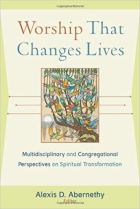 For the next few weeks, I’m going to reference one of my favorite worship theologians, John Witvliet, whose work has appeared in this space before. His chapter, “The Cumulative Power of Transformation in Public Worship,” in Worship That Changes Lives: Multidisciplinary and Congregational Perspectives on Spiritual Transformation (Alexis Abernethy, ed.) should be must-reading for worship leaders called to more than alarm-clock or cheerleader status on Sunday mornings. Witvliet writes of three sets of competencies that show up in corporate worship. The first he entitles “Gesture and Bodily Competencies.”
 tools that help keep our services flowing smoothly. Those of us in highly presentational churches have producers in our ears telling us how much time we have before we have to cue up the morning’s video, like a benevolent
  key concepts from the 1st-century church’s worship practices. The link will take you to the entire paper, but let me excerpt some particularly compelling observations where corporate worship and a sense of “holy expectation” are concerned. As you read, you might consider asking yourself how closely our current worship services mirror those described by Iorg. Even if you subscribe to the notion that much of the content in the book of Acts describes as opposed to prescribes, the question unsettles.
![elmer_gantry_burt_lancaster[1]](https://emmausroadworshipers.com/wp-content/uploads/2019/02/elmer_gantry_burt_lancaster1.jpg?w=224&h=137) brought to light enough times in other religious arenas that they don’t, distressingly enough, defy the imagination anymore. A casual historian of the 22nd century, surveying the landscape of American Christendom of the current era, might conclude that our pulpits are filled with nothing but Elmer Gantrys.
brought to light enough times in other religious arenas that they don’t, distressingly enough, defy the imagination anymore. A casual historian of the 22nd century, surveying the landscape of American Christendom of the current era, might conclude that our pulpits are filled with nothing but Elmer Gantrys. All this is great, but what else might make those who attend our services as visitors feel more welcomed? Carolyn Arends gave some suggestions in an article for Christianity Today a few years ago entitled “Hospitality Sweet.” I quote it at length because she captures the practical through the prism of the theological, always a good strategy.
 Emmaus Road Worshipers