
This is post number 21 in a series of random reflections I have been amassing over the past couple of years since retiring from steady, local-church, “weekend warrior” worship ministry. These ruminations are in no particular order, and they vary in significance. I welcome discussion on any of them.
Reflection #21: Good, theologically solid, grace-filled sermons really can be delivered in fewer than 45 minutes.
One of the hallmarks of most contemporary worship services is the primacy of the sermon. Every other vestige of the worship of days gone by got jettisoned by the founding fathers and mothers of contemporary worship. Hymnals? Gone. Organ? Gone. Baptistry? Gone. Altar? Gone. Stained-glass windows? Gone. Crosses? Gone, at least, most of them. Lengthy sermons that take up more than half the total time of the 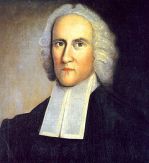 service, that shine the spotlight (these days, literally) on one single person as the primary and culminating facilitator of the people’s worship, that (in their worst manifestations) promote a celebrity-pastor culture that wages war on a significant theological lynchpin of the Church (the priesthood of all believers)? Repackaged as “teachings,” perhaps, but as alive and well as they were in were in the days of any of the famously long-winded pulpiteers (Jonathan Edwards, for example) of Christian history.
And yet, as my wife and I have traveled Chicagoland visiting churches, we have often been profoundly blessed, challenged, and encouraged by sermons that have been much shorter than the 45 minutes afforded most contemporary worship sermons (especially in the megachurches). Sometimes we’ve heard these sermons in mainline churches, which typically place far less time and emphasis on the pastor’s oration and much more time on the Table, Scripture reading, and other “liturgical elements” (recitations of creeds, responsive readings, corporate confessions, etc.). But we’ve heard short (relatively speaking) messages even in churches that pursue two-fold worship (worship set and sermon), often in churches that have a longer worship set up front than most. (In one multiple-site, mini-megachurch in our area, the pastor gets 25 minutes. A friend, he’s told me that though he balked at the time restriction initially, he’s found he’s been able to flourish amid the restraints, forcing him to get quickly to the essence of his message and eliminating anything that doesn’t sensibly lead to or follow after the climax of his words.)
I don’t have a right-vs.-wrong opinion here. I simply want to point out that if you can embrace the notion that the word God has given pastors for any given Sunday morning might be delivered as or even more effectively via a shorter sermon, you then allow for the possibility that God might have equally important words He wishes to convey via different channels other than the preaching. In a day and age where educators readily acknowledge the benefit of delivering content in multiple ways–i.e., understanding that not all of us are aural learners who learn best via one-way lectures–there might be some exciting tweaks that could break into the status quo where contemporary worship’s general service order and flow is concerned. Here’s hoping!
The Lord be with you!
Coming next week, Lord willing: Greeters in the average contemporary American church.
 we come to church these days is because so little Scripture is actually read in the services. (Few people who attend evangelical contemporary American church services need to be convinced of this truth, but to put the issue in sobering perspective, I commend this piece written a number of years ago by one of my grad-school profs, Rev. Dr. Constance Cherry:
  I have become so enamored of Debra and Ron Rienstra’s Worship Words: Discipling Language for Faithful Ministry, to which I have referred in this space before, that I plan to use it as a primary text in my Worship Resources class at Judson University next fall. Here they speak to the perfectionistic tendencies to which worship leaders often succumb. (In particular, consider how focusing on others, the world, universal pain, and the like in worship can help foster shared experience, which helps take worship leaders’ individual efforts out of the spotlight just a bit.)
 Grand Rapids, Mich. He has authored and edited numerous books and journal articles on the subject of worship over the years. This excerpt comes from a revelatory piece he wrote for Reformed Worship a few years back called “Constancy, Enduring Dispositions, and the Holy Spirit’s Help in Our Weakness.”
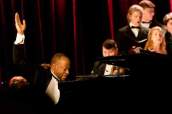 On the seventh day of Christmas, that guy whose blogs I read occasionally gave to me . . . not seven swans a-swimming but this video of Rev. Huntley Brown, an itinerant pianist who has traveled the world with the Billy Graham Association and currently serves as our Artist-in-Residence at the Demoss Center for Worship in the Performing Arts (DCWPA) at Judson University. Huntley and I were at Judson together as students back in the 80’s, and we have been good friends ever since. I pray this rousing rendition of the familiar Christmas classic blesses you today and throughout the remainder of the Christmas season. Please enjoy Rev. Huntley Brown, the Judson University Choir, and the Judson Civic Orchestra’s
  We begin with the namesake-founder of The Robert E. Webber Institute for Worship Studies (Jacksonville, Fla.), my doctoral alma mater, the chief person (among many) who kick-started my interest in worship. His Divine Embrace, one of his final books, sums up much of what had become passions for him.
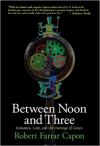 gourmet chef. Though firmly ensconced in the High Church, for a lengthy season he was a regular columnist for the firmly-ensconced-in-the-Low-Church satirical magazine The Wittenberg Door, published by those wild and crazy Youth Specialties folks in the 70’s and 80’s. Capon’s reflections on grace were then and continue to be transformationally life-giving for me. These excerpts come from Between Noon and Three: Romance, Law, and the Outrage of Grace. Here is his take on Paul’s famous declaration in Romans 8:1.
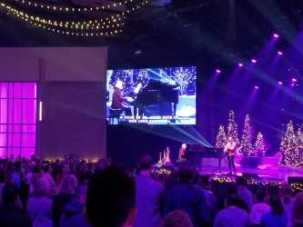 The above notwithstanding, I simply wasn’t prepared for the exuberance of the congregational singing yesterday morning. The whole room resounded in song. I could actually hear other voices with unusual clarity (for contemporary worship). I even asked the production team members afterward if they were piping the congregation through the house mix (they weren’t). If, as Aaron Niequist is fond of reminding worship leaders, the purpose of congregational singing is . . . wait for it . . . congregational singing, why don’t most congregations sound as robust as did those assembled yesterday morning? Here are three congregational-singing lessons for the other 11 months of the year to be learned from my Advent-worship experience yesterday.
 What a difference that made for the purposes of congregational worship! How powerful it was for grandparents, sitting with other oldsters, to look across the room to see their grandkids in the young-and-hip section raising their hands in worship. And how powerful for the kids to see their “ancient” relatives, tears streaming down their faces, singing a familiar hymn. Author Brian Wren explains the dynamic the congregation I served those 10 years experienced each week in his highly recommended Praying Twice: The Music and Words of Congregational Song:
 both/and approach to worship music I’ve ever encountered–rendered all the more gracious when you realize Wren is as “traditional” a church musician (organist, classical hymn composer) as you will find. For more on the subject of how architecture impacts worship, see my colleague Mark Torgerson’s An Architecture of Immanence: Architecture for Worship and Ministry Today.
 contemporary American worship; citing a greater awareness on the part of contemporary worship music (cwm) songwriters of the need, at very least, to acknowledge all three Persons of the Trinity in their lyrics; utilizing the writing of Dr. Lester Ruth to offer some ways to think even more intentionally about the role of the Trinity in cwm lyrics; and offering, courtesy of James Torrance, a description of what the absence of a Trinitarian perspective on worship produces: human-centered activity that often leads to weariness.
 and the Son on the lips of worshipers, but the Holy Spirit got excluded from sung praise more often than not. Several years ago, one of my worship grad-school profs, Dr. Lester Ruth, did a fascinating study of Trinitarian language (and the lack thereof) in contemporary worship music (cwm).
 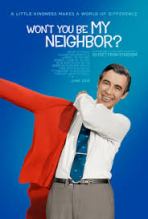 ministry of Fred Rogers, Won’t You Be My Neighbor? I and countless late Boomers and Xers grew up with his PBS kids’ program Mister Rogers’ Neighborhood, which ran from 1968 until 2001, what Rogers, an ordained Presbyterian minister, and many others in the Church considered his full-time vocational ministry. My wife Lea and I watched the doc last night, and I was deeply moved on several occasions.
 Emmaus Road Worshipers