Why and How Advent?

The best Advent movie of all time, in my humble opinion, is A Christmas Story, JeanRalphie Shepard’s delightful paean to small-town Indiana in the 1940’s and, in particular, to the longing and the yearning that all of us, but particularly children, possess as we wait for the arrival of Christmas—“lovely, glorious, beautiful Christmas, around which the entire kid year revolve[s].”  The narrator/protagonist, Ralphie Parker, 9, spends the entire movie in quiet desperation—quiet, that is, until he’s asked what he wants for Christmas.  Then, spewing forth like an avalanche, come Ralphie’s answers, again and again, accompanied by all the pent-up, anxiety-producing, desire-festering fervor he can muster:  “I want an official Red Rider, carbine-action, 200-shot, range-model air rifle, with a compass in the stock.”  And in those breathless moments we get a glimpse of what it means to long for something as we’ve never longed for something before.


Holidays and Holy NightsBut isn’t this just childish fancy?  Shouldn’t we instinctively reject such immature enthusiasm where matters of serious import—such as helping congregations experience a better understanding of God’s coming to us through a fuller appreciation of Advent—are at stake?  Not if the exhortations of Christ matter to us (cf. Matthew 19:14).  In fact, putting ourselves in a child’s snowshoes might be a good way to begin to come to grips with the magnitude of the message of Advent.   Christopher Hill, in Holidays and Holy Nights, says that Advent calls on believers

to take seriously the knowledge of childhood—knowledge from the quiet that winter nights lay over the world and the dark purity of the sky and the polished stars.  It is about what you knew in the silence of the waiting woods and in the twinkling white lights that shivered and flickered on bushes and trees as if the world were putting on elegant clothes. . . .

This quiet but electric expectancy gives us a hint of what it means to wait for Christ.  “It’s what I always wanted,” we hope to hear children say on Christmas morning.  My guess is that what they always wanted—and what we always want—comes earlier.  What children feel during Advent isn’t just the squirming impatience for a time that’s not here yet.  They also sense that daily life is being slowly transformed into something more interesting, something with a story to it. . . .

This feeling may be caused by the prospect of boxes under the tree.  If so, it’s a striking example of how something very big can be induced by a very small and humble stimulus, like the grain of sand in an oyster that makes a pearl. . . .  The magic of Advent is like going to bed in a familiar world and waking up in a story.  This is part of what we mean by adventus, waiting for Christ.

That said, for those for whom childhood was painful, perhaps—or for those whosecoming of god personality or temperament will not allow them to glean anything of significance from a spiritual excavation of the past—trying to juxtapose an understanding of Advent based on the excitement inherent in youthful Yuletide yearning might prove fruitless.  For these souls, tapping into the angst inherent in the human condition might be the best approach—for, as Maria Boulding acknowledges in The Coming of God, all of us have deep, unmet desires that can point us to Emmanuel, the God who is with us:

If you want God, and long for union with him, yet sometimes wonder what that means or whether it can mean anything at all, you are already walking with the God who comes.  If you are at times so weary and involved with the struggle of living that you have no strength even to want him, yet are still dissatisfied that you don’t, you are already keeping Advent in your life.  If you have ever had an obscure intuition that the truth of things is somehow better, greater, more wonderful than you deserve or desire, that the touch of God in your life stills you by its gentleness, that there is a mercy beyond anything you could ever suspect, you are already drawn into the central mystery of salvation.

Your hope is not a mocking dream; God creates in human hearts a huge desire and a sense of need, because he wants to fill them with the gift of himself.  It is because his self-sharing love is there first, forestalling any response or prayer from our side, that such hope can be in us.  We cannot hope until we know, however obscurely, that there is something to hope for; if we have had no glimpse of a vision, we cannot conduct our lives with vision.  And yet we do: there is hope in us, and longing, because grace was there first.  God’s longing for us is the spring of ours for him.

Pascal referred to that which is expressed by Boulding as the God-shaped void in all of us.  It is present in the unbeliever, of course, but it also is present, at least to an extent, in the believer as well, for we are strangers in a strange land, this world is not our home, and we won’t have that God-shaped void completely filled this side of heaven.  I believe that a historically accurate approach to Advent can speak to these issues for our congregations, and I plan to look at the history behind the season next week.

The Lord be with you as you wait on Him!

Posted in Uncategorized | Tagged | Leave a comment

Thanksgiving as Worship, Worship as Thanksgiving

Ron ManFor years, worship leader Ron Man has sent out a monthly e-mail called Worship Notes, a very helpful resource for worship leaders.  (You can access the blog here: http://wornotes.wordpress.com/).  In the November 2007 post, Man provided a list of excellent quotes on the subject of thankfulness (especially in light of worship), and I reprint a few of them here for your consideration:

“One of the most excellent methods of showing our thankfulness for deliverances is to tell our brethren what the Lord has done for us.  We mention our sorrows readily enough; why are we so slow to declare our deliverances?” — Charles Spurgeon, Treasury of David

“We should beware of even turning biblical teaching into an end in itself, whereas the goal of sound doctrine is heartfelt gratitude and thankful obedience.” — Michael Horton, In the Face of God

“Take heed, then, often to come together to give thanks to God, and show forth his praise.  For when ye come frequently together in the same place, the powers of Satan are destroyed and his ‘fiery darts’ urging to sin fall back ineffectual.  For your concord and harmonious faith prove his destruction, and the torment of his assistants.” — Ignatius of Antioch

“O how great the evil of ingratitude is!  It produces desire for vain things, and again produces blindness; and blindness produces idolatry, and idolatry leads to a whole deluge of vices.  Conversely, gratitude preserves love for God and the heart remains attached to him and is enlightened.  Filled with light, he worships only the living God and such true worship is followed immediately by a whole host of virtues.” — Martin Luther, Commentary on Romans

“Thanksgiving is the act by which man acknowledges his dependence upon another: it is therefore the fundamental acknowledgment of the Creator by the creature.” — William Nicholls, Jacob’s Ladder: The Meaning of Worship

“Until you become thankful, you will never find joy.  Being thankful is not telling God you appreciate the fact that your life is not in shambles.  If that is the basis of your gratitude, you are on slippery ground.  Every day of your life you face the possibility that a blessing in your life may be taken away.  But blessings are only signs of God’s love.  The real blessing, of course, is the love itself.  Whenever we get too attached to the sign, we lose our grasp on the God who gave it to us. . . . We are not ultimately grateful that we are still holding our blessings.  We are grateful that we are held by God even when the blessings are slipping through our fingers.” — M. Craig Barnes, Hustling God: Why We Work So Hard for What God Wants to Give

“The Rabbis declare that, in the Messianic Era, all sacrifices will be unnecessary except the thank-offering.  All sacrifices shall have been completed their educational mission, all save the one inculcating the duty of gratitude.  That sacrifice is to continue forever.” — T.F. Torrance, Royal Priesthood

“There is no duty more urgent than giving thanks.” — Ambrose of Milan

“Thanksgiving is at the heart of Christian worship. . . . In worship [we] give thanks to God for our creation and re-creation in Jesus Christ.” — Donald Stake, The ABCs of Worship

“There is always a choice between resentment and gratitude because God has appeared in my darkness, urged me to come home, and declared in a voice filled with affection: ‘You are with me always, and all I have is yours.'” — Henri Nouwen, The Return of the Prodigal Son: A Story of Homecoming

I wish you a blessed Thanksgiving.  The Lord be with you!

Posted in Uncategorized | Tagged | 1 Comment

When It’s OK Not to Sing in Corporate Worship

Several months ago, a well-known Christian author created a stir in cyberspace by detailing his lack of connectedness with much of what transpires in corporate worship in American churches these days.  He confessed that he doesn’t attend church all that often, and, when he does, he doesn’t connect to God very well via singing to Him.

The predictable backlash came on quickly and furiously, and, as is often the case in cyberspace debates among Christians, some good content was lost in the midst of unhelpful style.  As one who did a doctoral thesis on the importance of and value in congregational singing, I certainly disagreed with the author’s implied thesis (that congregational singing isn’t important for all Christians), but I also thought some of the responses to his blog post missed out on an important point.  Sometimes, in corporate worship, it is, in fact, OK not to sing.  Here are four cases when this is true:

1) In corporate worship, it’s OK not to sing if the theology embedded in the text is erroneous.  There are a couple of familiar hymns and choruses that, in my opinion, have suspect theology.  For me, they are easy to reject—but, truthfully, these examples are few and far between.  More difficult are songs that, at one level, express truth but do so in a manner that takes our focus off of God and His goodness.  A few years ago a popular song said the following of God: “You make everything glorious, and I am Yours!  What does that make me?”  Yes, it’s good that we declare God’s creation glorious (Ps. 19:1), and humankind is part of that glorious creation, but in a culture that is already alarmingly narcissistic, to sing lyrics that draw such strong attention to self (“Look at me!  I’m glorious!”) seems ill-advised at best.

2) In corporate worship, it’s OK not to sing if you are moved momentarily by the message 5or the music.  Most of us have probably experienced this dynamic at one time or another.  At the conclusion of the memorial service for Dr. Edward Thompson, the longtime choir director at Judson College and a mentor for hundreds of us Judson grads, the entire congregation (led by an alumni choir) sang Handel’s “Hallelujah” chorus.  Well, most of us sang.  I got about 12 measures into it, and spent the rest of the song blubbering like a baby.  But those tears were my act of worship; I couldn’t have sung that afternoon if my life had depended on it, but it was OK not to sing at that time.

3) In corporate worship, it’s OK not to sing if you are convicted temporarily by the song’s lyrics.  I often stop singing during the chorus of the popular hymn “I Surrender All.”  It’s not that I don’t believe in the message of the song; it’s just that I can’t sing those lyrics with much integrity most of the time.  I don’t, in fact, surrender all to Jesus, much more often than I would care to admit.  Realizing that in the midst of the singing, I have two choices: I can sing anyway, pretending that I really mean it this time, or I can stop singing.  I often choose the latter, and I spend that time in quiet reflection and/or prayer, asking God to help me get to the point where I can sing those lyrics with authenticity more regularly.  (Worship leaders, we can, in our transitional commentary, help our congregations sing with more integrity songs that speak of total, 100% commitment by introducing them as our humble prayers instead of as our bold declarations.)

4) In corporate worship, it’s OK not to sing if you are unfamiliar with the song . . . but this only applies for the first time through that song.  Most of what we sing in church these days will be familiar enough that by the second time around, folks should be able to engage, even if with hesitation, for the rest of the song.  If a song is really tricky, all of us can still at least mouth the words.

May the Lord bless our efforts to sing–and,  occasionally, not to sing–for His glory.  The Lord be with you!

Posted in Uncategorized | Tagged | 2 Comments

Horizontal Worship to Enhance the Cause of Christ, part 6

The tardiness of the last few posts, including this one, can be attributed to the preparationChoir tour fall 2014 for and recuperation from this fall’s Judson University Choir tour, which wrapped up on Sunday.  The timeliness of it all–the tour’s conclusion coinciding with the conclusion of this series on using encouragement as a manifestation of our horizontal worship to our Lord–feels God-ordained, as I am full to the brim with examples of how the JU Choir and I were encouraged this past weekend:

  • One of my favorite grad-school professors, Rev. Dr. Constance Cherry–who has appeared in this blog a couple of times already–hiked down from Marion to Muncie, Ind., to worship with us.  It blessed me that this professor whose teaching so inspired me would make this effort.  A couple of the choir members had parents in attendance that evening, too, which is always special.
  • I got to reconnect with Judson alumna Lilia (Griffin) Morales at her high school alma mater, Delaware Christian School, where her mother directs the choral programs.  I was so blessed to connect with Lilia and be encouraged by her life’s story and ministry.
  • My son Austin traveled 2.5 hours with a couple of buddies from Waynesburg University in southwestern Pennsylvania to see his old man and to worship with Dad’s choir.  Two former Judson choir members came that evening, too, including one, Val Boscaljon, with whom I had sung in the Judson Choir back in the mid-80’s.
  • The JU Choir was privileged to lead worship with our president, geneDr. Gene Crume, who delivered powerful words on how God calls us and knows us by our names and how those truths should provoke us to act toward our fellow Christians.  Dr. Crume’s good words of encouragement after the service about the Choir’s ministry were a great shot in the arm at a point in the tour when fatigue–physical and emotional–was setting in.

There were so many others–a great service at the home church of one of our choir members; a close-to-home concert for which many (myself included) had family members in the congregation–and the trip, though draining (the switch to serving as a worship-leading choir that we made a few years ago seems to have sparked no small measure of spiritual resistance on these tours), was a wonderful time of bonding for the students and encouraging the saints.  (For a brief vlog–a new vocabulary word for me–report from one of our freshmen, Micah Andersen, click here: Vlogsgiving 6-11, Choir Tour!)

The experience on tour, so full of encouraging moments, prompts the final exhortation in the BUILD acronym: Deliver daily a message of encouragement.  The above already contains some great examples of this, so let me give just one additional practical application of this principle that I have found to be helpful in my quest to be an encouragement to others.

FBFor years, I had a love/hate relationship with Facebook.  On the one hand, I enjoyed reconnecting with friends with whom I hadn’t communicated in ages.  Particularly in my role as Director for the Center for Worship in the Performing Arts at Judson University, using Facebook and other social-media outlets has been very important for networking and Kingdom collaboration.  On the other hand, I too often found that scrolling through my newsfeed provoked unhealthy responses.  If I wasn’t envying the perceived-greener-grass posts of my friends, I was going back over my own posts, like some junior-high schoolgirl, to see who had (and who had not) liked them–rather a pathetic revelation when I finally slowed myself down long enough to apply some critical self-analysis to my social-media habits.

In time, I came upon a strategy that not only addressed my unhealthy FB usage but also dovetailed nicely with the goal to deliver a daily message of encouragement.  Now, before I log on, when by God’s grace I’m on top of my spiritual game, I pray that God will bring to my attention those who need to be encouraged that day.  I limit myself to 10 minutes online, so because I’ve collected over 1,000 friends over the years, I have to trust that God will direct my newsfeed to those who need a shot in the arm.  I then try both to like certain posts and to write encouraging comments where appropriate.  In particular, when a situation calls for prayer, rather than saying that I’ll pray for the person and/or situation (which usually means that maybe I actually will, if I remember), I pray right in the comment section.  I don’t know that those on the receiving end of those prayers feel significantly more blessed by this gesture than by other comments or promises to pray, but I know I feel better about my role as an encourager because of this simple change in my FB behavior.

Thanks for reading these posts about encouragement and our horizontal worship of our Lord and Savior.  Here is a recap of the BUILD acronym one last time.  I pray God will continue to use His children to BUILD up each other in the faith!

  • Believe universally the best about one another.
  • Unlock regularly the fortress of your schedule.
  • Invite occasionally someone who needs encouragement into your life.
  • Look purposefully for creative ways to bless others.
  • Deliver daily a message of encouragement.

The Lord be with you!

Posted in Uncategorized | Tagged | Leave a comment

Horizontal Worship to Enhance the Cause of Christ, Part 5

If you’re reading for the first time, welcome and thank you!  I have been trying to make the case in this space that those of us in leadership in the Body of Christ need to be encouragers and to be encouraged by others–with much greater frequency than is usually the case.  In so many churches and parachurch organizations–especially those that make an effort to pursue excellence at seemingly any cost–the cup is always 10% empty instead of 90% full, and that mindset wears on the strongest of us.  Regularly serving as angelic ministers of  encouragement (see 1 Kings 19:5-8) helps us worship our Lord horizontally (to use the vernacular of the day) and benefits the Kingdom in profound ways.

I have been using the acronym BUILD to help flesh this idea out, and we come to L today,Lea which stands for Look purposely for creative ways to bless others.  For today’s post, I get to brag on my wife Lea, the love of my life, and one of the kindest and most compassionate people I have ever met.  She hates attention of this nature, and this post might provoke a marital conversation this evening, but I venture forth, nevertheless, because this anecdote illustrates the point so well.  (My, what a cute couple we were just, oh, a few years ago.)

When my children were little, my mother-in-law purchased an all-day pass for us at one of the largest YMCA’s in the country.  We welcomed the opportunity to have the kids burn off some energy in a fun facility like that, and so we pulled into the massive parking lot with great enthusiasm.  I went ahead with Amie and Austin to make sure the reservation was in place, and Lea trailed a few minutes behind us, serving as the carrier of the swim toys, goggles, and flippers.

Just inside the front doors sat a young man in a wheelchair who was, very obviously, messed up physically.  His body was rigid with paralysis, and he was gaunt to the extent that he almost could have squeezed someone else into the chair with him.  As if that weren’t enough, the poor guy couldn’t communicate normally via his vocal cords.  And so, once the kids and I walked through the electronically controlled double doors, we were greeted by a pretty hideous-sounding, robotic voice.  “Hello!” it/he said.

“Uh, hi, ” I stammered, trying quickly to move past him so as not to have this encounter linger in my kids’ minds, generating nightmares for the next two weeks.  Thankfully, he didn’t try to engage in a conversation, and I took the kids up to the front desk, which was still in close enough proximity to see Lea when she entered.  (This was before cell phones, or I might have texted her quickly to let her know what to expect, lest she, too, be thrown off kilter by the in-your-face enthusiasm of the mechanical greeting she was about to receive.)

What happened next first surprised, then delighted, and ultimately humbled me.  When Lea came in, the guy in the chair greeted her in similar fashion, but instead of acting like the priest and the Levite in the parable of the Good Samaritan (Luke 10:30-37) and zipping past him as quickly as she could, she stopped, got down on one knee so as to be at his eye level, and began to have a conversation with him.  (As a physical therapist who had worked with folks with traumatic brain injuries, this was familiar territory.)

“Hi!” she said.  “My name’s Lea.  What’s yours?”

Slowly the young man manipulated his arm and the stylus that was attached to the end of his hand so that it descended upon a certain square on what looked like some kind of a checkerboard.  When he pressed down on the square, the robotic voice said, “I’m Charlie.”

“What do you do here at the Y, Charlie?”

More movement of the arm.  More gently pressing the stylus down upon a certain square.  “I’m one of the greeters!”

“Charlie, how did you end up in the chair?”

Still more movement of the arm.  Still more gently pressing the stylus down upon a certain square.  “I was in a motorcycle accident five years ago.”

communication boxAnd so it went for the next five, somewhat-labored minutes, as Lea had a conversation, at least of sorts, with this guy via his communication device, one that looked something like the one in this picture.  As I reflected back on this incident later, it occurred to me that those five minutes probably constituted the longest conversation that guy had had–at least with someone who wasn’t a caretaker–in quite a while.  In slowing her schedule down long enough to allow herself to be an agent of grace (see the U in BUILD); by stooping to his level to allow him the dignity of having an eye-level conversation, something he rarely experienced; and by entering, for just a moment, this man’s brokenness, Lea creatively blessed a child of God and gave him encouragement to press on for another day.  What a precious gift!

Saints, let’s get our spiritual antennae out and look purposely–in other words, with great intention–for creative ways to bless others as part of our worship of our triune God!  It will be effort well extended!

The Lord be with you!


Posted in Uncategorized | Tagged | 2 Comments

Horizontal Worship to Enhance the Cause of Christ, Part 4

As the busyness of my current semester’s efforts at Judson University’s Center for WorshipCWPA_Stacked_Full Color in the Performing Arts intensifies, I am more than ever convinced of the value of what I’ve been sharing in this blog of late.  As I have tried to practice what I’ve been preaching about believing universally the best about others and unlocking the fortress of my schedule, I have felt God’s pleasure in tangible ways.  I in the BUILD acronym stands for Invite occasionally someone who needs encouragement into your life; there was a significant moment in my youth when I actually started to do that.

In junior high, I was a popular student and, all present appearances to the contrary notwithstanding, a pretty decent athlete–so I was “in.”  Ours was a small school, however, so the “ins” and the “outs” intermingled regularly.  Ricky was one of the outsiders who tried too hard to force his way in . . . and awkwardly so.  Too, he had the sad misfortune of getting caught picking his nose in public, thus earning the nickname “Picky,” junior high students being kind and compassionate souls.  If ever there was a young man who would have benefited from a Christian peer inviting him into his life, Ricky was he.

One day Ricky decided to have a birthday party, and all of us in the in crowd were invited.  The evening he had planned actually sounded fun, so there was general consensus among my peer group that if we were all there, we could probably have fun even though Ricky was the host.  Much to my chagrin, however, when my parents dropped me off at his house, I was the only one there.  All of my cool buddies had decided not to come, and I was left with the prospect of spending the entire evening, alone, with the very uncool Ricky.

But, to my pleasant surprise, I had a blast, albeit one that shook my Baptist foundations a little bit.  Ricky’s mother, a culinary whiz, served a delectable, five-course dinner, accompanied, to my horror, by a glass of red wine.  I had spent every first Sunday of the month, right before communion, reciting the Church Covenant (prominently glued into the front cover of the hymnals), which very unambiguously stated that I “would abstain from the sale and use of intoxicating drinks as a beverage.”  But having been taught by my home-economics-teaching mother that it’s polite to try at least a small portion of all that’s offered at dinner, I cautiously took a sip, half expecting the ground to open up underneath me and swallow me whole.  When it didn’t, I breathed a sigh of relief and tried to enjoy the rest of the night.

Frankly, it wasn’t all that hard to do, although the after-dinner entertainment proved to be no less scandalous.  I had not been within an area code’s proximity to R-rated movies up to then, but off to an R-rated movie we went nonetheless.  I remember the film to this day: The End, with Burt Reynolds and Dom DeLuise.  By today’s standards, it would rate a PG-13, I’m sure, but it caused my tender psyche a bit of consternation all the same.  Still, all things considered, I had, to my great amazement, spent a really nice evening with Ricky, one of the most uncool kids in the entire school.

The next Monday, all my cool buddies were discussing what they had done that weekend.  “Did anyone actually go to Ricky’s party?” someone asked with a laugh.  “Um, yeah, I did,” I replied, with palpable embarrassment.  “No way!”  “Are you kidding?”  “Really?”

As I reflected back on this instant years later, I realized that I was then at a crossroads–actually, Ricky and I were there together–and I could go down one road or the other with him.  “Was it any fun?” they asked.

I choked.  “Not really,” I lied.  “It wasn’t much fun.  You guys didn’t miss anything.”  And as I raised my eyes from my circle of friends, they met, head on, Ricky’s sad, tear-filled eyes.  He had a wan smile on his face, as if my words didn’t matter, but I knew I had wounded him.  Deeply.

I hadn’t given that incident much thought until years later, when my mom informed me that Ricky had committed suicide.  I don’t lose sleep over this, and there were far more serious issues than my immature, junior-high behavior that Ricky was dealing with when he decided to end his life.  But I also know, without a doubt, that I had an opportunity to invite, on that one occasion, someone who needed encouragement into my life, and I willfully chose not to do it.

Cousins_DonOne of the early teaching pastors at Willow Creek, Don Cousins, once gave a profound message in which he exhorted believers to have at least one or two Very Dependent People (VDP’s, he called them) in our lives at all times–for their benefit, of course, but also for ours.  Yes, having too many overly dependent friends isn’t healthy, either, but most of us err on the other end of the spectrum, don’t we?  Friends, let us worship our Lord by inviting folks on the margins of our world to come alongside us, for at least a short time, for at least part of our journey.  The Kingdom will be richer for those efforts.

The Lord be with you!

Posted in Uncategorized | Tagged | Leave a comment

Horizontal Worship to Enhance the Cause of Christ, Part 3

Recently in this space I have been looking at a particular example of so-called horizontal worship, encouragement from and to members of the Body of Christ.  Part 1 of this blog post detailed why I feel so strongly about this, especially for those of us in leadership.  In a nutshell, the enemy hates our efforts and will aim arrows of discouragement our way at every opportunity; regularly hearing (or reading) words of encouragement from believers whose opinions we trust and whose thoughts are important to us often serves as an onward-Christian-soldiers boost to our morale, steeling us for the tasks to which our Lord has called us.

I use phrases beginning with the letters BUILD to flesh out this concept.  B, covered last week, stands for Believe universally the best about one another.  Doing so makes it much more likely that we can muster up the energy required to be encouraging to each other on a regular basis.  It also helps us follow the Scriptural mandate to treat others as if they were more important than ourselves (Phil. 2:3).

U stands for Unlock regularly the fortress of your schedule.  I wish I could recount stories of how successfully I have practiced what I preach here, but any such stories would be lies, for I struggle with this big time.  I make it a policy to leave my office door open any time I am in and without a scheduled meeting, but, truth be told, I would just as soon keep the door shut.  As a general rule, I juggle too many projects, and uninterrupted time in the office, with its opportunity to free me up to push electronic papers, is the only way to keep those projects all in the air (to extend the metaphor).

But, of course, an open-door policy attracts folks who want to talk.  I am ashamed to admit how many times I have given good eye contact to a student, nodding my head at appropriate intervals, all the while with my mind racing, wondering when I’m going to get to the work this student’s unscheduled visit interrupted.  Rather than detail other depressing anecdotes of my failures here, let me just point to Jesus, our ultimate example.

Luke 5 is one chapter from Scripture (any number of others would work, too) that illustrates the point.  The NLT divides the text into five stories, combining miracles, the call of Levi (Matthew), and teaching about fasting.  What strikes me about each account is that it very much appears as if none of them had been planned in advance.  In other words, Jesus’ ministry flowed out of His being very present in the moment and not driven by the first-century version of a Day-Timer.

In verses 1-11, Jesus’ instructions to Peter come at the end of what seems to have been a typical teaching session.  In verses 12-15, Jesus heals the man with leprosy following a random meeting.  In verses 17-26, friends of a paralytic go to ridiculous lengths to help him meet Jesus, who was busy teaching at the time.  In verses 27-32, Jesus calls Levi while leaving town and on the way to another destination.  And in verses 33-39, Jesus’ teaching on fasting comes not as part of a sermon but as a response to a question posed by the crowd.

In other words, none of the five stories features as its focal point Jesus following through with an established meeting, appointment, or responsibility.  Every single story, instead, features as its focal point our Lord (who would have had every reason to employ a personal secretary to help Him manage his daily comings and goings) responding spontaneously, randomly, serendipitously to people and events that come to Him in the moment . . . and with no apparent angst for the interruption or the bother.  What a model for all of us.

JudyMy friend Judy Bjorklund, with whom the Judson University Choir ministered in Jamaica this past May, was so fond of the following adage that we christened it the Bjorklund Beatitude: “Blessed are the flexible, for they shall not get bent out of shape.”  May that be said of us, O Lord!

Next week, Lord willing, we’ll look at the I in BUILD.  Until then, the Lord be with you!

Posted in Uncategorized | Tagged | 1 Comment

Horizontal Worship to Enhance the Cause of Christ, Part 2

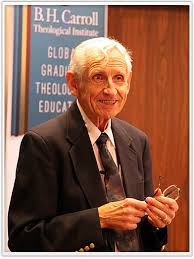
Last week I began a look at so-called horizontal worship, the idea that our worshipConnie Cherry better pic directed solely to God, vertical worship, must be accompanied at some point by an outpouring of ministry at some level on behalf of God’s people, what Rev. Dr. Constance Cherry, introduced in the first post in this blog (below), refers to as “worship for the sake of others.”  I ended the piece by saying that encouragement of fellow believers is one of the great underutilized arrows in the quiver of Christians in our corporate efforts against the enemy.

Simply put, encouragement is horizontal worship of the highest order.  In my own life, I have seen it used time and again to strengthen me for the enemy-baiting tasks to which God has called me, and I have tried to make encouragement of my fellow leaders and the students to whom God has entrusted me a hallmark of my various ministries.  I see five ways Christians can BUILD each other up, and I will, Lord willing, cover one encouragement exhortation each week for the next five weeks.

B in the acronym stands for Believe universally the best about one another.  The enemy loves to whisper destructive thoughts about our brothers and sisters into our ears at every opportunity.  Resisting the devil so he will flee in this instance helps us follow the Scriptural mandate to treat others as more important than ourselves (Phil. 2:3), and when we choose to believe the best about them, we are much more likely to offer an encouraging word to help them on their journey.

YacOne of my favorite anecdotes on this subject comes from Mike Yaconelli, co-founder of Youth Specialties and its magazine, The Wittenburg Door (later shortened to The Door), who died in an unfortunate truck accident in 2003.  In an article in the May/June 1992 issue of The Door titled “My Day of Judgment,” Yaconelli, in his inimitable style, rails against judgmental Christians who “want you to know that God’s grace is not free, it is very expensive, and you caused the cost to be even higher than it should have been.”

To illustrate his point, he tells the story of a contractor hired to do work on his house.  The man had had a serious drinking problem in the past, which had greatly affected his family, and “even though the man had left town for two years and had supposedly been to rehab, we were not happy to have an alcoholic, wife-abuser over to work on our home.”  Nevertheless, the work was somewhat urgent, and his quote was less than several other estimates, and so Yaconelli reluctantly agreed to allow him to do the work.  When the job was finished, Yaconelli told the contractor to stop by his office for his check, to which the man replied, “Oh, I was just going to talk to you about that.  We need to talk about my bill.”  I will let Yaconelli, edited only for clarity, tell the rest of the story.

I immediately felt my face turn red, and I thought, “That S.O.B.!  He hasn’t changed one bit.  I knew I should never have given in, and now he is going to try to screw me out of more money.”  I was furious.  “People never really change,” I thought to myself.

He showed up at my office about 5:00.  I was ready for him.  He sat down and we exchanged small talk for a few minutes.  He took out his book and began to write down the details of his bill.  Before he finished, he looked at me and stopped writing.  Awkwardly, he began to speak.

“Mike, a couple of years ago I was really a mess.  My son and my wife experienced a lot of pain because of me and my drinking.  I know that during that time both of them came to you for counseling.  You helped them through a really rough time in our lives.  I have my son and my wife back again, thanks to you.  I couldn’t thank you then, but I’m thanking you now.”

He placed the invoice with the words “Paid in Full” on my desk, slowly stood, and shook my hand.  Our eyes met.  His were filled with tears of gratitude; mine were filled with tears of embarrassment, humiliation, and remorse.  I sat at my desk for a long time.  The silence was pointing its finger in my direction.  I had just come face to face with the most judgmental person I have ever known . . . myself.

No wonder I have such a difficult time with judgmental people.  I am one of them.  No wonder I criticize judgmental people so loudly.  If I scream loudly enough maybe no one will hear the judgment dripping from my voice.  I had judged this man.  I had written him off.  I had not forgiven him. . . . For how many years have I raged about the arrogance and judgmentalism of others?  Maybe I need to get out of the judging business and into the loving business.

Friends, in our efforts to be the Body of Christ to each other, let’s believe the best about one another and, in doing so, bless the Father as we bless His children with encouragement for the daily journey.  Next week, Lord willing, we’ll look at the U in BUILD.

The Lord be with you!

Posted in Uncategorized | Tagged | 2 Comments

Horizontal Worship to Enhance the Cause of Christ, Part 1

I have become convinced that the single greatest weapon the enemy uses to thwart the cause of Christ has nothing to do with the Seven Deadly Sins or any other sin of commission.  The forces of darkness, no doubt, rejoice when a pastor resigns following an extra-marital affair, when a CFO at a Christian university is let go for having embezzled funds, and when well-known Christian leaders turn their hubristic rhetorical venom upon each other in public or cyberspace arenas.

These are major victories for the enemy, to be sure, but equally helpful to Satan’s cause are the results of his more-subtle efforts to whittle away–daily, even hourly–at believers’ understanding of our identity in Christ and value in the Kingdom.  If he can knock us off stride, even a bit, he can cause us to miss divine appointments, to be inward-focused at times that call for outward-focused behavior, and even to doubt our calling.

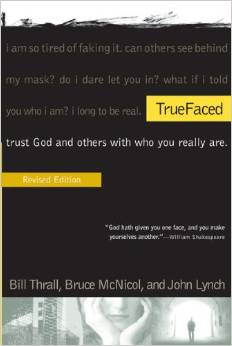
TrueFacedIndeed, although I acknowledge how destructive dramatic sins of commission are, in my own journey and in that of many friends and spiritual mentors (known or admired from a distance), what discombobulates us more often is, rather, a sin of omission: our penchant, in our weaker moments, for believing the enemy’s lies about us.  To wit, we have been told in Scripture what we are to believe about ourselves.  As the wonderful book TrueFaced reminds us, in Ephesians alone we are told that we are blessed (1:3), chosen and holy (1:4), adopted (1:5), forgiven (1:7), favored (1:7-8), close to God (2:13), promised great things (3:6), loved in exorbitant fashion (3:17-19), and cherished (5:29)!  And yet–again, in our weaker moments–we choose not to believe these truths.

In my own ministry as director of Judson University’s Center for Worship in theCWPA_Stacked_Full Color Performing Arts (CWPA), we are, by God’s grace, in a real season of plenty, when God’s hand of blessing is very evidently upon us.  We have record numbers of music and worship arts students; close to 100 in the JU Choir ranks (with opportunities last year to open for Sanctus Real, The Digital Age, and Citizen Way and to co-lead worship with The Brilliance–with more opportunities for major collaborations in the days ahead); a CD project by MassAnthem_Alive_AlbumCovera student band, Mass Anthem, that Worship Leader magazine said (in the July/August issue) “stands up to any major label release in regards to theology, musicality, and production”;  and so many irons in the fire for the coming months and years that, as never before in my 30 years of being associated with my alma mater, in the words of our President, Gene Crume, “It’s a great day to be a Judson Eagle!”

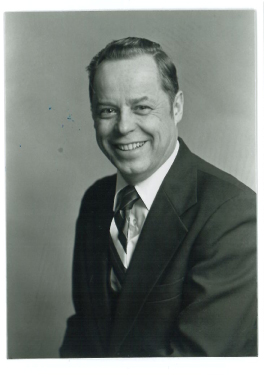
And yet this has been a tough year at times.  Part of it can be attributed to watching my dad die a slow death from dementia.  This hero of mine, from whom I took so many cues about life (“You reek of Dad,” my brother once told me), who in his prime could hold 700 music appreciation students at the University of Cincinnati’s tony College-Conservatory of Music in the palm of his hand, helping them to see value in music to which they couldn’t relate prior to taking his class, and lecturing them without notes for hours, now can’t string a cohesive sentence together.  That’s been rough.

Part of it is the aftermath of turning 50 in March, complete with the attendant physical strains and psycho-emotional angst that typically accompany this calendar milestone.  It doesn’t help that my “clientele,” as it were, consists of college students in the prime of their lives; my lack of comparative youthful vitality stares me in the face Emptying the Nestdaily.  (My wife works as a physical therapist, mostly with geriatric patients with serious medical conditions.  She usually feels young and chipper by comparison.)  And part of it probably relates to our being quasi-empty-nesters now, a dynamic whose emotional, sucker-punch potential I underestimated heretofore.  (By the way, I highly recommend Emptying the Nest for those in a similar circumstance.)

But part of it, though, can, without doubt, be attributed to the very vocation-related success, noted above, for which I am so grateful.  Say what?  Things going so well translates into mild depression?  Well, sometimes.  Recall the fallout from one of Elijah’s greatest victories, as recorded in 1 Kings 18-19.  Almost immediately after Elijah serves as the conduit through which the power of God is made unmistakably manifest in the confrontation vs. the prophets of Baal, and just four verses–four verses–after he has been given supernatural, Usain Bolt-like speed to run ahead of Ahab’s chariot to safety, Elijah, despairing for the future, asks the Lord to take his life!  God, in His grace and mercy, sends an angel to minister to him, and Elijah is strengthened for the tasks ahead.

Friends, we have the opportunity to be angelic ministers of Christ if we will look intentionally and with great intensity for ways to encourage each other.  Encouragement is one of the most powerful, under-utilized Kingdom weapons in our arsenal, and regularly blessing our fellow believers serves as a wonderful example of “horizontal worship,” the idea that our worship must, in the spirit of James’ discussion of works in chapter two of his epistle, at some level lead us to bless others in addition to God, or it is not worship at all.  In the days ahead, I hope to share five tangible ways we can BUILD each other up for the Kingdom’s glory.  The Lord be with you!

Posted in Uncategorized | Tagged | Leave a comment

Thoughts on the Scriptural Mandate to Sing New Songs, Part 2

Last week, I shared thoughts re: what the Old Testament, particularly the Psalms, has to say about the mandate to sing new songs.  This week, I will look briefly at the New Testament’s focus on singing “psalms, hymns, and spiritual songs,” as found in Ephesians 5 and Colossians 3.

Defining the three terms isn’t as easy as might first appear.  Some scholars suggest no clear musical delineation exists between the three.  Eduard Lohse opines that, taken together, “they describe the full range of singing which the Spirit prompts.”  Rudolf Schnackenburg likens Paul’s use of these terms to the Psalmists’ use of parallelism, suggesting that Paul here displays his “stylistic preference for the triplicate.”

That said, many theologians argue for distinct musical types here.  Ralph Martin’s understanding is representative.  He says psalms likely refer to songs from the actual Hebrew psalter, what we now know as the OT Psalms; hymns are “tributes of worship directed to God”; and spiritual songs “may mean either ‘spiritual’ over against ‘secular’ or worldly or, as is more likely, ‘songs inspired by the Spirit.'”  There is fascinating discussion in the literature re: the spontaneity factor as connoted in this last term (what some today would label charismatic expressions of worship), and some authors put forth that the adjective spiritual here applies to all three classifications, not just songs.  In other words, there’s a lot more to these exhortations than immediately meets the eye.

Principles for worshipers emerge from a careful look at the two “psalms, hymns, and spiritual songs” passages.  The Ephesians text comes from verses 15-20 of chapter 5 in the New Living Translation, under the heading “Living by the Spirit’s Power.”  In verse 18, Paul instructs the believers not “to be drunk with wine, because that will ruin” their lives; instead, they should “be filled with the Holy Spirit.”

The latter inclusion of the subject of drunkenness prior to encouragement to be filled with the Spirit seems odd initially.  Andrew Lincoln notes that while the “former represents folly,” the latter “is a prerequisite for wisdom.  JerryBoth involve the self coming under the control of an external power, and the states of alcoholic and of religious intoxication were often compared.”  My doctoral thesis advisor, Gerald Borchert, in his wonderfully thorough book Worship in the New Testament, asserts Paul’s rhetoric calls Christians to a “hearty” singing–in contrast to the obstreperousness inherent in “becoming drunk and carousing.”

But the juxtaposition here of the concept of drunkenness serves as a comparison in addition to a contrast and gives us reason to say that our corporate worship should, at least periodically, be intoxicating.  Such worship will, obviously, look different for different people and in different cultures, but Christians filled with the Spirit of God will, at least on occasion, in the midst of their worship, find themselves, in the words of the great hymn, “lost in wonder, love, and praise.”  For those of us who look at the world via prisms of rationalism and logic, this is an important word.

In the text, the evidence of being filled with the Holy Spirit (as opposed to wine), in verse 19, is the singing of the psalms, hymns, and spiritual songs.  What is particularly interesting to note, given the above context, is that at the end of a long warning about the dangerous potential of association with products of the culture, Paul has nothing but praise for music.  In other words, writes Stephen Guthrie,

to a Christian community surrounded by ignorance and immorality; to a people who themselves were prone to blindness and indulgence of their former way of life; at the conclusion of a passage warning against irrationality and sins of the flesh–Paul urges singing and music making. . . . Paul shares the same broad concerns [about music’s power to move people emotionally] as Augustine and Calvin, but the recommendation emerging from those concerns is entirely different.  To put it very crudely, Augustine says: “Irrationality is bad.  Sensuality is bad.  Therefore, be careful about music.”  Paul on the other hand says, “Foolishness is bad.  Sensuality is bad.  Therefore, you had better sing.”

Indeed, in our quest to worship our Lord with all our being, we need not fear the power of music.  In fact, we can and should channel its power for our benefit in our fight against the enemy.

Finally, dissecting the grammar of the Greek, Klyne Snodgrass determines this verse illustrates the results of being Spirit-filled; in other words, the participles in the text are not part of the earlier imperative (as if singing and making music would produce a Spirit-filled life).  Hence, we can embrace wholeheartedly the recent worship-related rhetoric that speaks of the goodness of both vertical and horizontal worship, the former offered directly to God and the latter manifested in Kingdom-building actions on behalf of others.

RyanOne of my favorite current worship leaders, Ryan Flanigan (@FrFlanigan), in speaking of this passage (along with Rev. 4:11 and Is: 6:2-3), notes that sometimes we sense

we are not “worshiping” unless we are singing to the Lord. . . . [But in worship we] join with the angels, singing both to one another and to the Lord. . . .  There is so much more joy when we use our songs to remind one another of the Gospel, when we exhort and encourage one another with our unified voices.

 I will look at the similar passage in Colossians, Lord willing, at a later time.  Until then, the Lord be with you!

Posted in Uncategorized | Tagged | Leave a comment