We see two hallmarks of Dad’s pedagogy in episode 8 of Man and His Music, “The Musical Stage.” First, as has been the case in all of the episodes thus far, Dad is all about bringing in others–sometimes colleagues, often students–to help illustrate his points, sure, but also to give others a chance to shine. As popular as Dad knew he was with his audiences, it wasn’t all about Simon and the opportunity to feed his own ego; it was–so, so often–about giving opportunities to folks to prove themselves in situations where they would stand a reasonable chance of being successful. So here we get a repeat visit from local Cincinnati TV personality Rob Reider, singing Kenny Rankin’s “Peaceful” early in the show and then an over-the-top and tongue-in-cheek rendition of a country weeper, “Ya Done Stomped on My Heart” near the end of the broadcast. We also hear from a couple of music theater conservatory students doing a duet from Pajama Game and a comedic musical troupe illustrating sketch-TV (Saturday Night Live was just two years away) musical renditions.
A personal case in point on this subject from my youth: As I became decent at jazz bass, Dad would use me on gigs periodically to keep the money in the family, when possible. Usually he did this in low-pressure situations where the spotlight wouldn’t burn too brightly (wedding receptions, bar mitzvahs), with friends of the family filling in the band (often a trio or quartet, so there were only one or two others playing with us). One time, however, he needed me at the last minute for a pretty high-visibility gig for some high rollers who had requested a sextet–i.e., there would be the likelihood of playing more complex pieces from the be-bop era as opposed to the Broadway show tunes we’d often do with a smaller group. As if that weren’t enough, as we pulled into the parking lot, Dad casually noted, “By the way, the trombonist on this gig just got off the road with the Woody Herman Band.” Good thing he hadn’t dropped this on me before we headed to the gig, or I’m sure I’d have been petrified and tempted to beg out.
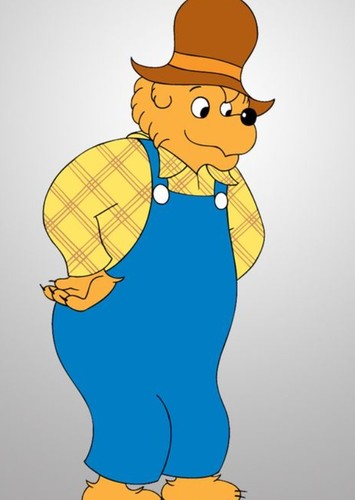 Like the great educator he was, Dad called familiar tunes for the first hour or two, to allow me to get into a groove, but then, having facilitated my establishing myself as at least relatively competent to be on the same bandstand as these pros, he called a tune I’d never played. I gently leaned over to him and sheepishly said, “Dad, I’ve never played this one before.” As he did on countless occasions, he replied, “Watch closely, Small Bear,” an allusion to the father-son encouragement in the classic Berenstain Bears children’s books. Only after playing the tune through with a minimum of mistakes did I realize why he had positioned me right behind him, to the immediate left of the piano, within easy visible range of his left hand. For the duration of that song, and throughout good chunks of the rest of the gig, Dad, who didn’t need to play as much piano activity since there were three non-rhythm section musicians in the mix that night, took the index finger of his left hand and, a split second before the chord change, hovered it immediately over the correct note to play next. As long as I kept my eyes on that index finger, I was fine, and no one knew that I was WAY out of my league playing with these grizzled veterans.
The second hallmark on display in “The Musical Stage” is Simon the Showman, in full Professor Harold Hill mode. This shows up best in his parody of an opera ensemble piece following the evil baritone’s promise to the slit the throat of the voluptuous soprano for rejecting his advances. After first singing each of the solo parts (including the tenor’s off-in-the-wing “No, you won’t!” ascertation), Dad launches into the melody line from the chorus’ commentary: “And then the villagers come in, or the peasants come in from the hillside, or people come out of the taverns or through the doorways and around the trees and through the windows or out of the cigarette factory, and they sing,
Oh, watch him plunge that dagger into her lovely throat. She’ll bleed a bloody river; we’ll surely need a boat! Oh we’ll need a boat in Genoa tonight! We’ll need a boat in Genoa tonight!”
Around this time Dad was doing a lot of public speaking for various events, and sometimes he’d take me with him, partly to get me out of the house so Mom could put my two siblings to bed more easily, but partly because I think he sensed, even then, that I might follow in his pedagogical footsteps and would benefit from sitting at his feet when I could. On once such occasion, the topic was opera; Dad launched into “We’ll Need a Boat in Genoa,” and the audience roared. I must have been about 12 or so, and, to this day, I remember thinking my father was the coolest dad in the world and that I was so proud to be his son.
Hope you enjoy “The Musical Stage.”

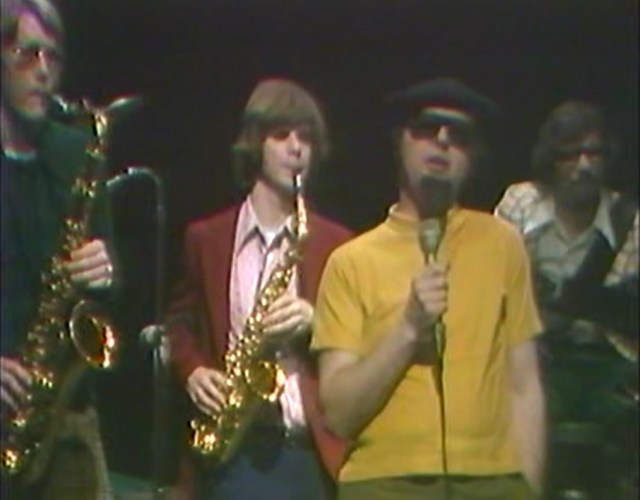

 Not that there’s not some entertainment. No, we get an opening montage with Dad channeling Johnny Cash, complete with wig and hoisted-high guitar. And we get some great pics of the early country and rockabilly artists from the 50s, and we hear clips of Patti Page’s “Tennessee Waltz,” Hank Williams’ “Cold, Cold Heart,” and Eddy Arnold’s “Bouquet of Roses.” And live-in-the-studio guests Glenn Canyon and the Americanyons serve up Kris Kristofferson’s “For the Good Times” alongside an original from the Canyon canon.
But most of what transpires in these 30 minutes feels as it felt when I took Dad’s class back when I attended the University of Cincinnati, including an interesting look at the development of BMI as a competing force with which ASCAP ended up having to reckon and five 1974-era prescient predictions about the future of country music, all of which, to one extent or another, have come true in the near-50 years since.
Please enjoy
Not that there’s not some entertainment. No, we get an opening montage with Dad channeling Johnny Cash, complete with wig and hoisted-high guitar. And we get some great pics of the early country and rockabilly artists from the 50s, and we hear clips of Patti Page’s “Tennessee Waltz,” Hank Williams’ “Cold, Cold Heart,” and Eddy Arnold’s “Bouquet of Roses.” And live-in-the-studio guests Glenn Canyon and the Americanyons serve up Kris Kristofferson’s “For the Good Times” alongside an original from the Canyon canon.
But most of what transpires in these 30 minutes feels as it felt when I took Dad’s class back when I attended the University of Cincinnati, including an interesting look at the development of BMI as a competing force with which ASCAP ended up having to reckon and five 1974-era prescient predictions about the future of country music, all of which, to one extent or another, have come true in the near-50 years since.
Please enjoy 

 Accompanying him and bringing the concepts to musical life is a group of conservatory students who called themselves the Burnet Woods Wind Quintet. Burnet Woods was, and still is, a lovely park not too far from the University of Cincinnati’s main campus. At around the time of this recording, my mom would often take my siblings and me to play in the park, especially its long cement slide and paddleboats in the neighboring pond. For the Romantic Era offering, Dad joins the ensemble on the piano.
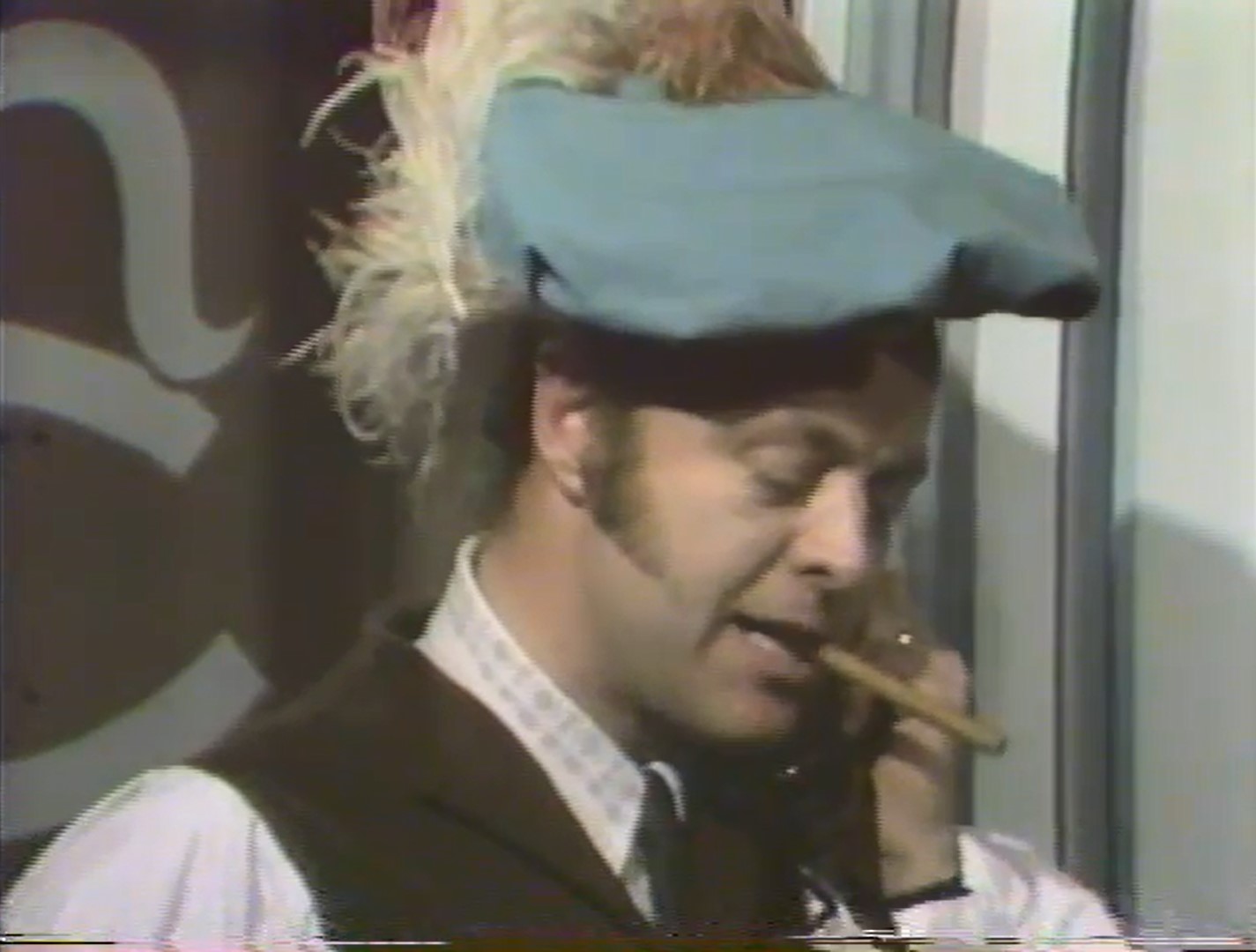 It’s hard all these years later to reflect accurately what a radical notion this was and how revolutionary such pedagogy was then, especially when Dad applied the exact same schema to the other forms of pop music, including country, Broadway, and rock (Elvis = Baroque, Hendrix = Romantic, etc.). All this acknowledged, Dad didn’t care about being right on this subject just for the sake of being right (although he didn’t waver in his belief that he had the proper view on all this). No, he still and always subscribed to the notion that part of being a great educator in the late 20th century traced a line back to Vaudeville entertainers. (To whatever extent that was true then, it’s self-evidently true 50 years later.) So along the way we get treated to a cool brass quintet and two sketches where Dad plays a cigar-chomping member of the ruling class placing a personal order to artists (Hadyn in one, Botticelli in the other) for commissioned art pieces. Never a dull moment when Dad was on stage . . . er, teaching.
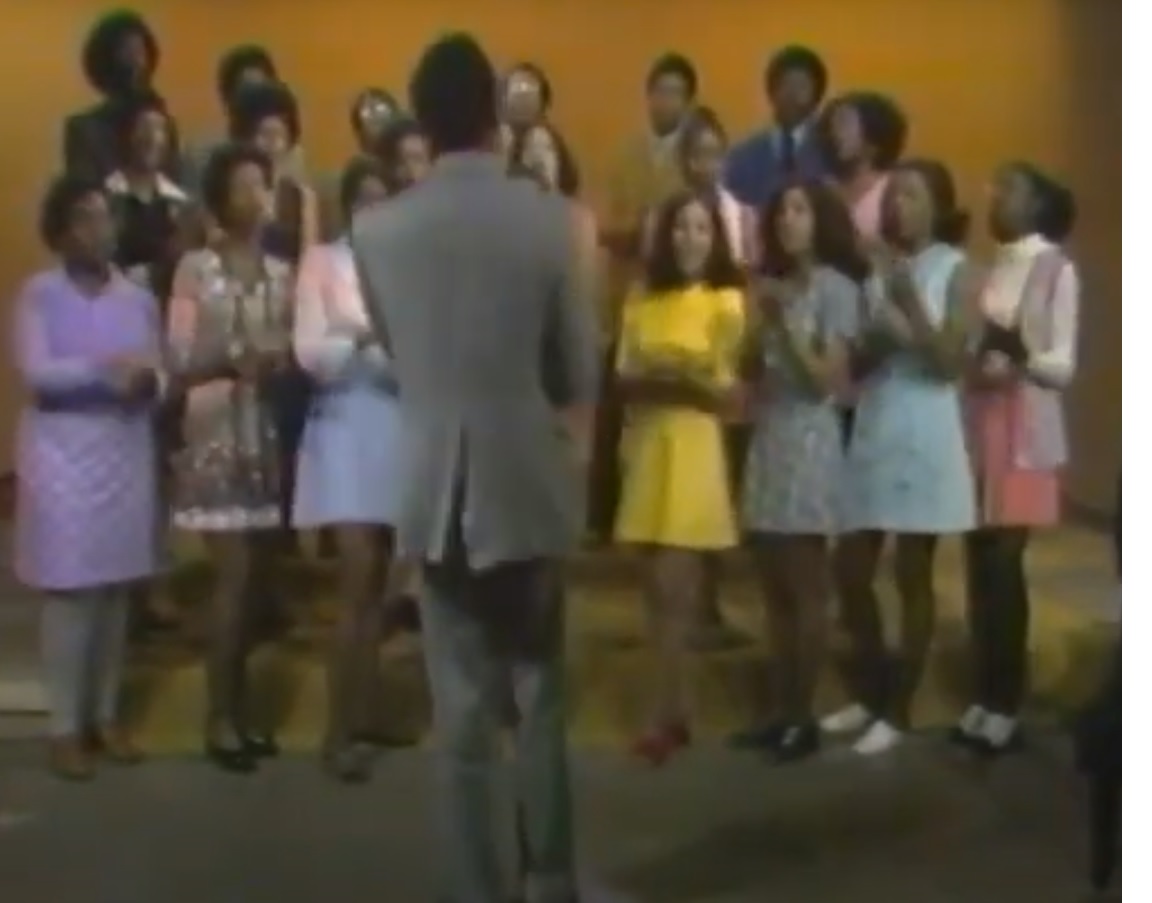 Episode 7 of Man and His Music finds Dad exploring all kinds of choral forms, and we’re treated to a range of great choral music from a contemporary Black gospel choir, a barbershop quartet, and a collegiate madrigal singers ensemble, which performs Peter Schickele as P.D.Q. Bach’s send-up of traditional madrigals, “My Bonnie Lass She Smelleth.” (Note: The audio recorded features a lot of hiss and static. Back at the time these shows were recorded, you might have seen a scrolling message along the bottom of your TV feed saying something along the lines of “We are experiencing technical difficulties. The trouble is not in your set.” Consider this an equivalent notice.) I hope you enjoy
  Emmaus Road Worshipers