
Last week I offered the following gloomy prediction where matters of race are concerned in white suburban contemporary American evangelical churches: “[George] Floyd’s death will be a vague memory six months from now in most contemporary worship services in suburban America–having had an ethereal impact, if any–unless two things happen.” The first of those concerned a willingness to abandon our status-quo service orders (including our status-quo congregational song choices), at least periodically, in times of strenuous civic upheaval. That’s an effective, but short-term, way of acknowledging black lives matter.
A second, longer-lasting prescription suggests strongly that real change will not be effected until worship leaders–especially those of us who serve churches that have historically expected a steady diet of K-LOVE/CCLI Top 25 songs for congregational singing (not because they are bad but because they speak to, and in a language of, a very narrow sociological understanding of Christian faith)–educate ourselves a bit in order to do more than appear to pay lip service to our efforts to show solidarity with our African-American brothers and sisters. In the same manner that Black America has long touted education as a primary means to the end where any number of issues (self-respect, financial stability, et al.) are concerned, so, too, must White America use education to promote greater unity among its worshipers.
Hence, in no particular order, are a few resources (among a multitude shared by various ministries on social media) I think will help that cause:
Two Essential Books
 If you’re a full-time worship leader–and even more so if you’re a weekend warrior–you likely don’t have time to do too much in-depth research on any subject, much less one as complicated as how corporate worship should speak to racial injustice. So consider picking up both of Dr. James Abbington’s Readings in African American Church Music and Worship, one-stop shops for all things related to the rich heritage of the worshiping black church. Volume One features such essays as W.E.B. DuBois’ “Of the Faith of the Fathers,” Sister Thea Bowman’s “The Gift of African American Sacred Song,” and the intriguing “I Am the Holy Dope Dealer: The Problem with Gospel Music Today,” by Obery M. Hendricks, Jr. (intriguing not only in title but in content, which illustrates worship-wars rhetoric is not the exclusive domain of white churches). Volume Two, published a few years later, takes a look at such topics as “The Theological Validation of Black Worship” (Samuel D. Proctor), “Back to the Heart of Worship: Praise and Worship in a Los Angeles African American Megachurch (Birgitta J. Johnson), and “Work the Works: The Role of African American Women in the Development of Contemporary Gospel” (Tammy L. Kernodle). I used the first volume extensively when I considered the new songs of Thomas A. Dorsey, the Father of Gospel Music, in my doctoral thesis; both volumes are excellent.
One Essential Web Post
The Calvin Institute for Christian Worship, once again, has been quick to make available a slew of references, compiled over the years of its ministry, to help churches speak authentically during these trying times. You can access their material here.
One Essential Playlist
Ryan Flanigan and the folks at Liturgical Folk, some of my favorite indie worship leaders, have curated a magnificent playlist drawn from some of their recent releases, Songs to Fight the Evil in Us. Their efforts speak to my charge above re: variety of worship expressions, a good start for white worship leaders looking for different contemporary worship music.
Final Thought
Others more informed and eloquent (and, I fully admit, with more at stake) than I have urged the American Church to work for real and lasting expressions of racial justice in our congregations. The gravitational pull of years of status-quo practices will be immense in the weeks and months ahead, especially since the enemy hates to see the Church break out of comfortable confines. The last bullet point from the Calvin post says this: “[T]here is always a temptation to think that paying attention to this for a little while will help us get past it instead of thinking of this as a lifelong posture for every Christian eager to bear the fruit of the Holy Spirit.” (Read that again and let it sink in.) In the midst of unspeakable pain and sorrow, worship leaders have an opportunity to exercise prophetic muscles for the sake of the Kingdom.
The character trait that comes to mind here is humility. Might we all pray, in the words of this great modern song (in the style of a spiritual, published by GIA as part of the Abbington-curated African American Church Music Series), “Guide My Feet” (“Lord, while I run this race, for I don’t want to run this race in vain”), taken from the Judson University Choir’s spring tour to Missouri a few months ago. (The link takes you directly to the song; feel free to watch/listen to the rest of the service, if you are so inclined. A nice rendition of Rich Mullins’ “If I Stand,” complete with hammered dulcimer, comes right after.)
The Lord be with you!
 tipping point for America–in other words, a straw-breaking-the-camel’s-back, tragic event (the culmination of a sea of
  Hence, for the next few weeks, I will draw from an article I was privileged to write for Worship Leader magazine a couple of years ago (Spring 2018) entitled “Fostering Beauty.” In it, I referenced some of my favorite authors and friends, so in this first part, you’ll meet Frank Burch Brown, my Judson University/Demoss Center for Worship in the Performing Arts colleague Mark Torgerson (pictured), Robert Webber, Andy Crouch, Jeremy Begbie, and Rory Noland. I hope you’ll be blessed as you read.
 Many of you are already familiar with my Judson University alumnus buddy Ian Simkins, a pastor at the “YellowBox” church, aka Community Christian Church (Naperville, Ill.), but perhaps you are unaware of the radio show he co-hosts with Pastor Brian From, The Common Good. If so, here’s your introduction.
 Three: Another good friend to whom I’d like to introduce Emmaus Road Worshipers readers is Dave Horn, another fellow Judsonite, the founder and owner of Geartechs.com, an independent and dynamic audio/video supplier based in Columbus, Ohio. I’ve purchased tens of thousands of dollars’ worth of gear from Dave over the years (most of it when I was directing the chapel program at Judson, some of it when I was a weekend-warrior worship leader), and I highly recommend him and his ministry–and he really
  Going back and reminding myself of the significant ministry of Rich Mullins during this pandemic has been healing, and I hope it has ministered to those who have stumbled upon these blog posts. Here are two final excellent words (as before, edited for clarity), the first a typically Mullinsian, alarmingly honest word on the nature of temptation:
 Finally, I close this series on the informal teachings of Rich Mullins–via concert song transitions and recorded seminar discussions (see previous posts)–with a thought on God’s sovereignty, perhaps a more-helpful-than-otherwise-would-be-the-case reminder during our current global crisis. We pick up the narrative right after Mullins had talked about how tranquil the Maryland countryside seemed by moonlight as he made a late-night commute via I-95 to Miami:
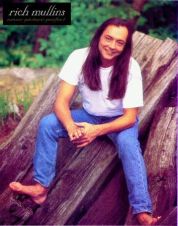 interesting thoughts on the state of contemporary American corporate worship. (This extended quote, like all from previous posts, is edited only for clarity.) From “Worship Buzz”:
 I confess the core of Mullins’ argument touches a nerve for me, for I know worship leaders serving in small or midsized churches, without the resources available in larger congregations, who have been told, in so many words, that the corporate worship they plan and execute is a contributing reason young people (the same demographic that Mullins said concerns him, above) leave for the megachurches. Marva Dawn, in her excellent short book on Psalm 96, How Then Shall We Worship? speaks to Mullins’ initial anecdote to explain changes in corporate worship driven by the need for sensation or a good show:
 I’m going to get right to it this week; see previous weeks’ posts for context. Mullins never married, so he could address singleness and healthy, adult, non-sexual friendships with a true and honest voice. From “Sex and Self-Confidence”:
 Mullins’ Here in America DVD. If you never had a chance to see Mullins in concert, you missed a significant part of his ministry: the thoughtful musings he used as transitional material between songs. I shared a handful last week, and here are a few more. In a time when so many of our comfortable notions of Christianity and the Church are being rearranged for us, it’s good to be reminded a little discomfort can be good for the soul and stretch us in ways that ultimately benefit us greatly. Mullins was always good for, as the saying goes, comforting the afflicted and afflicting the comfortable. (Quotes, again, have been edited only for length and clarity.)
 Emmaus Road Worshipers