
For episode 6 of Man and His Music, “Vocal Styles,” Dad and his producers came up with the idea of casting the content in terms of a talk show, the likes of which were as popular then as they are now, if a bit less caffeinated. The model used was the shows of Mike Douglas or Merv Griffin, whereby guests engaged in serious dialogue on subjects from time to time and weren’t merely peddling their latest wares (movies, books, albums, etc.). Hence, the experience was often (not always) more intellectually stimulating than what we get today with the offerings from Kelly Ripa and less political than what we get from The View. Politics weren’t off limits–far from it–but they were discussed, by and large, respectfully and without the vitriol with which so much of our current political conversation is laced.
The host of the “show” here is Cincinnati media maven Rob Reider, who played the cheery sidekick to the older and more mature Bob Braun on the local daily noontime The Bob Braun Show. (George Clooney’s uncle, Nick, had a rival show that aired around the same time on a different local channel.) Reider had a marvelous singing voice, so his serving in this role would have made sense to Cincinnatians. He also fancied himself the comedian, which we see here throughout the episode. His continual mispronouncing of Dad’s name I’m pretty sure was an ad lib. Dad seems caught off guard initially but soon settles into the schtick and rolls with the punches like the pro he was. It would not have been unlike Reider to throw this into the mix at the last minute to spice things up a bit, and, in fact, it does add an edge to what would have started to become a bit predictable by the halfway point of the show.
Along the way, as always, we get great listening examples from the world of music to illuminate Dad’s content. After the farcical cold opening (hello, Saturday Night Live), in which a legit soprano incongruously intones Loggins & Messina’s “Your Mama Don’t Dance, and Your Daddy Don’t Rock ‘n’ Roll,” we settle into a catalog of vocal styles featuring the recorded likes of Sherrill Milnes, the English countertenor Alfred Deller, Bing Crosby, Ethel Merman, Ella Fitzgerald, Roy Acuff, Mick Jagger, and many more.
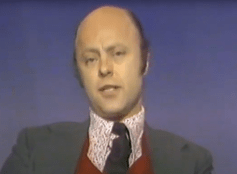 We also hear from University of Cincinnati College-Conservatory of Music vocal students (one for each part, SATB) singing classical fare and illustrating various aspects of their abilities beyond the differences in their range. The slide-down-a-chair-to-allow-the-newest-guest-the-prime-real-estate efforts were a staple of these shows, particulary Johnny Carson’s Tonight Show (as opposed to many shows now, where the first guest does his/her thing and then exits, allowing the host to pay full attention to the next one). We also have some beautiful period fashion examples, vintage 70’s, including Reider’s bell-bottom slacks and every guy’s lapels. Quite the sartorial showcase.
Thanks for reading. (Get more backstory, if interested, from previous posts.) Here’s Man and His Music, episode 6, “Vocal Styles.”
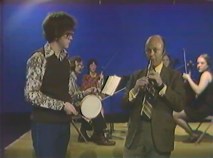 Episode 5 of Man and His Music, “Instrumental Forms,” covers material for which creative pedagogy is hard to come by. When you’re considering the structure of your basic piece of string quartet music, it is what it is what it is. Still, Dad brings some lightheartedness and fun to what would be, in the hands of most professors, a rather dull exercise. In this episode, for example, we get
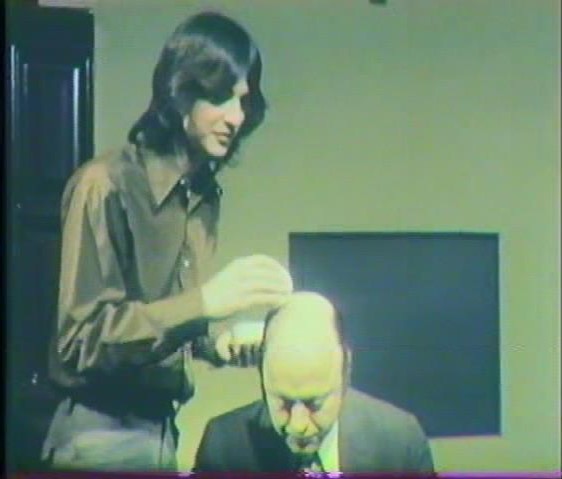 called him “Lenny”) Bernstein with the New York Philharmonic Strings, some vintage photos of early Moog synthesizers (note the correct pronunciation: “MOH-g,” not “MOO-g,” despite the spelling), and another classic Dad moment (22:15) where he struggles to remember the most quintessential of all bluegrass instruments, the banjo. Indeed, there are more gaffes in this episode than most, and in today’s world, they’d be re-recorded quickly and polished to a fine sheen, the same way the make-up folks polished Dad’s head for the cameras.
 Dad’s in full performance mode here, singing “You Are My Sunshine” and other songs from his adolescence (in the picture, Dad’s the second from the right in the barbershop quartet), backed by a quartet of colleagues from the University of Cincinnati and the city’s vibrant jazz scene. The overarching structure for this episode features several allusions to The Tonight Show, hosted at the time (and for over 30 years) by the comedian Johnny Carson (the same show now hosted by Jimmy Fallon). The references most folks at the time would have caught, Carson’s show being as popular as it was, include drummer Larry Brown acting as studio sidekick Ed McMachon, who began each show with a prolonged
 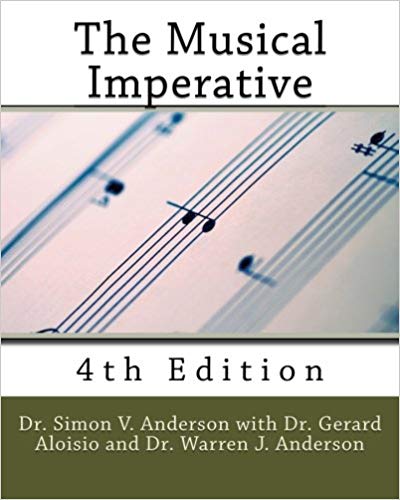 Last week I returned to the blogosphere by linking to the first of 10 half-hour episodes of my father’s TV show, Man and His Music, which debuted 50 years ago on Cincinnati’s PBS affiliate, WCET, TV-48. This week, in the second espisode, Dad dives into a lecture on the six common components of music, material that eventually wound up in his first book, The Musical Imperative. His ability to break down concepts into language understandable by the average Joe and Jane is on display here, as he, for example, compares music to science when discussing the elements of tone and when he likens ovearching structure in music to the building blocks of language (a note = a syllable; a motive = a word; a theme = a clause; etc.).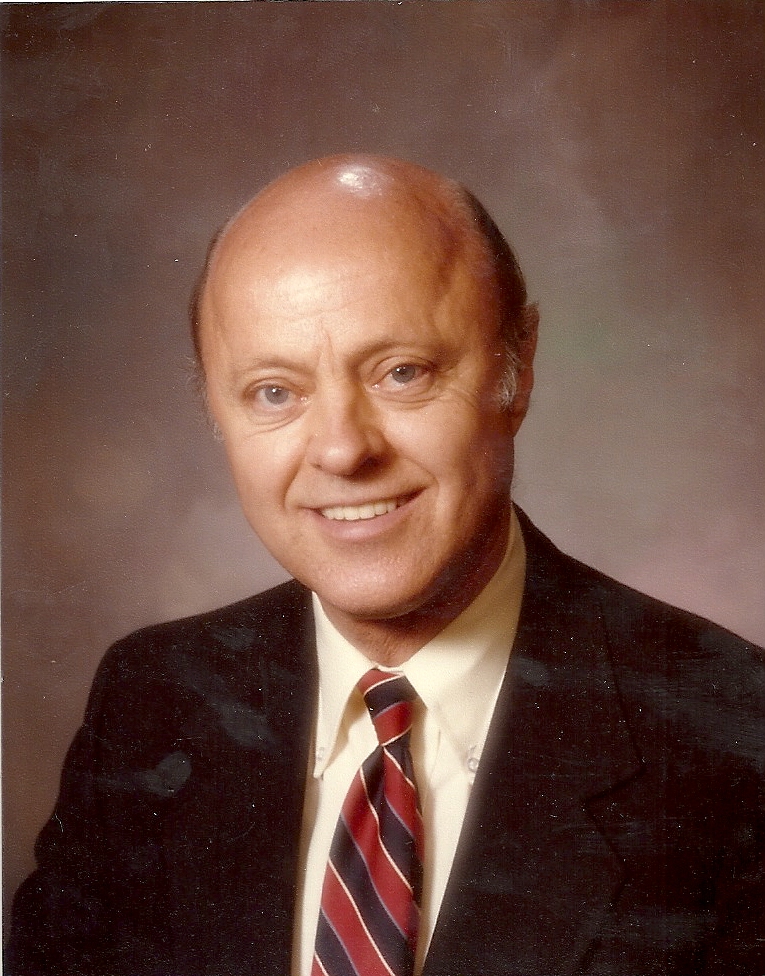
 Because congregational song is a passion of mine–it was the focus of my doctoral thesis at the Robert E. Webber Institute for Worship Studies–many of my periodic blog posts focus on the subject. (Anyone who reads this blog frequently will be familiar with the theme of inclusivity that runs through the posts.) I was reminded of the importance of song selection a few weeks ago when the worship team at the church my wife and I attended began the service with two newer tunes but finished the set with “Holy, Holy, Holy”–sung like a straight-ahead hymn of my youth (no superfluous bridge, no simplified chord structure), only with praise-band accompaniment instead of organ. The quality of the people’s response was overwhelming; where their collective vocal efforts had been pretty tentative on the first two, lesser-known songs (I looked around me and saw most folks simply standing in place looking bored), the place erupted when the band launched into the more familiar and older song.
 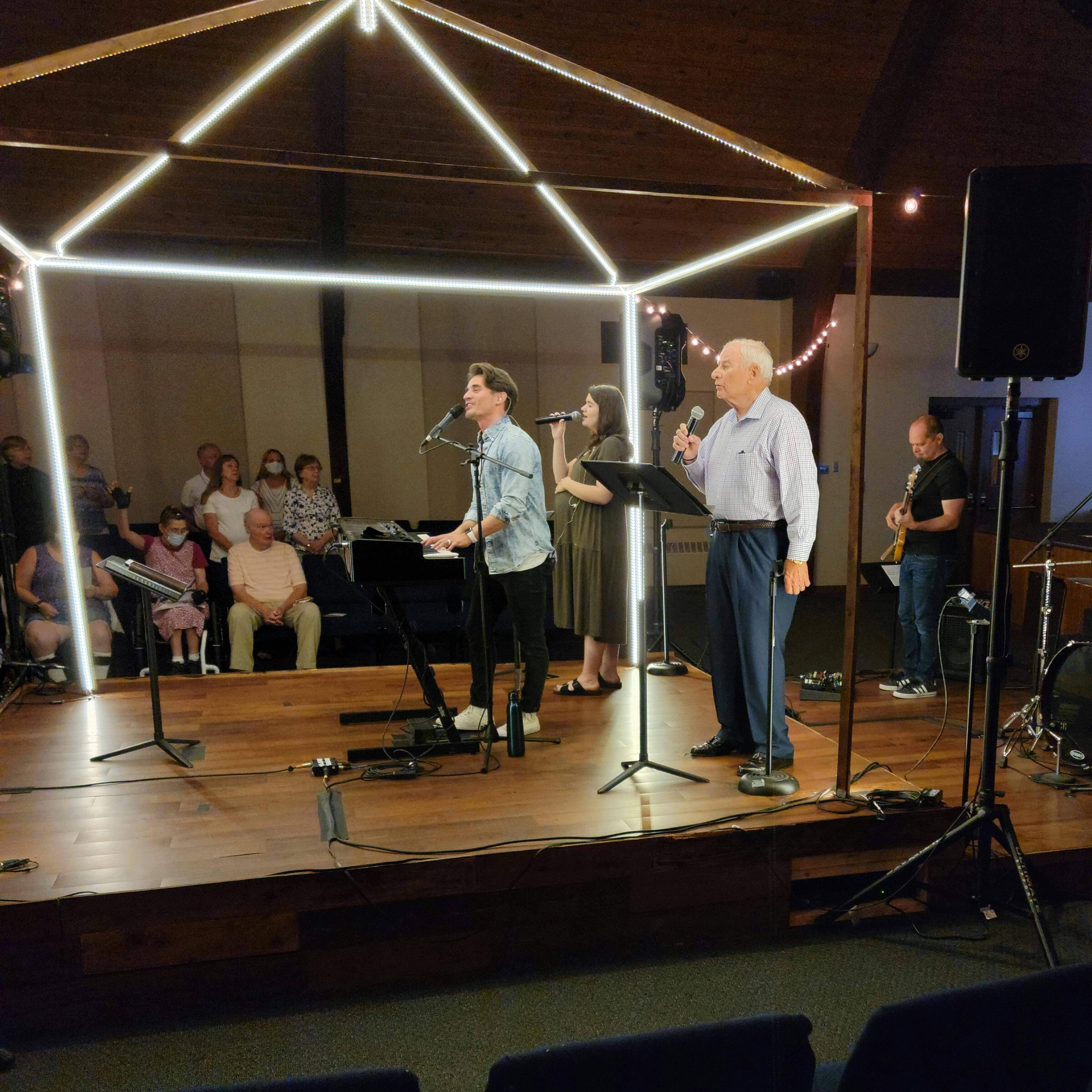 Yesterday, my wife and I attended First Baptist Church in Elgin, IL, where one of my former students, Joshua Hoegh, serves as the Worship & Creative Arts Pastor. Of the numerous excellent worship leaders Judson University has trained over the past 20+ years, Joshua is one of the most aesthetically minded, season in and season out creating beautiful, meaningful sacred spaces to enhance his congregation’s worship. As is my wont, I took some notes on the ways Joshua facilitated the worship, items I shared with him after the service (#ProudProf). As I did, I realized that much of what transpired yesterday serves as a good model for the future in light of eased restrictions. Specifically, the leadership at FBC made several intentional decisions during COVID that might be worth retaining, in some capacity, after COVID. I list a few of them for your consideration.
 Emmaus Road Worshipers