
 Last week in this space I declared Andraé Crouch to be the best contemporary worship music (cwm) songwriter of all time. Today I look at five of his best songs for evidence to support my claim, songs that are found in most recent Protestant hymnals, a staggering accomplishment for an African-American composer given the surfeit of songs from writers of European and Caucasian-American descent in most hymnals. (If you didn’t have a chance to read that post, you can do so here while also taking a look at a couple of links to great resources for broadening your church’s congregational-singing experience utilizing contributions from African-American writers.)
“The Blood Will Never Lose Its Power” was Crouch’s first major contribution to the Protestant Christian canon of congregational song, written when he was in his teens and debuted with his group The Disciples in the mid-60’s. Even casual readers of this blog will recognize my number-one pet peeve re: current cwm songwriting is its stultifying reliance on four-chord (and the same four chords in the same progressions) power ballads at the expense of just about everything else. The current CCLI Top 10 contains nine such I-IV-vi-V (or any number of variations on the theme) power ballads and only one song that gets up and moves a bit, “This Is Amazing Grace” . . . and after you’ve been inundated with a tsunami of power ballads, any up-tempo tune feels like amazing grace, indeed. Though “The Blood Will Never Lose Its Power” is also a ballad, its grooves are more slow-jam rhythm & blues than close-dance rock and roll, and it uses a whopping 8-10 chords (depending on how you harmonize passing tones), including two separate instances of rarely-heard-in-cwm diminished chords.
If you only know one Andraé Crouch song, you probably know “My Tribute” (often known by its subtitle, “To God Be the Glory”). Another vintage Crouch harmonization, utilizing several interesting chords, “My Tribute” employs an ascending melody on the chorus, propelling the thrice-repeated main-point (à la “Feed My sheep” and other biblical exhortations found in threes) before providing, Psalm-like, and in triumphal fashion, the reason God is worthy of the glory. Also in the spirit of the Psalms, the verse and bridge use devotional language that celebrates intimacy with the Almighty while avoiding “Jesus is my boyfriend” sentimentality. Last week, I mentioned Crouch’s ground-breaking efforts promoting diversity (The Disciples, shown in the video, featured both white musicians and several women), and you can see and hear the results of those efforts here, including a feisty trumpet solo from Fletch Wiley.
In addition to “My Tribute,” the song of Crouch’s that has crossed over into universal appeal most significantly is “Through It All”–as can be seen in this Gaither Homecoming Video celebrating the ministry of Billy Graham. (That’s Cliff Barrows and George Beverly Shea Gaither acknowledges early on.) Again I want to point out the evidence of diversity, how readily the racially mixed group on hand joins in with Cece Winans’ vocals and Crouch’s piano on the chorus. There aren’t too many, unfortunately enough, African-American composers whose songs can be sung so familiarly by the stalwarts of southern gospel music Gaither assembled, including Hovie Lister, Howard and Vestal Goodman, and George Younce. As an added bonus, you get an encore performance of one of Crouch’s shake-a-leg classics, “Can’t Nobody Do Me Like Jesus.” (Unlike “Through It All,” this one is rarely sung in white churches, as evidenced by the stoic response of southern gospel legend James Blackwood, although his son Billy and nephew Terry are doing fine to his immediate right.)
Blackwood fares better (see him over soloist Jessy Dixon’s left shoulder) with another Gaither video featuring Crouch’s “Soon and Very Soon.” In the spirit of self-referential, home-in-heaven gospel songs like “When the Roll Is Called up Yonder,” “I’ll Fly Away,” and “When We All Get to Heaven,” “Soon and Very Soon” celebrates the eventual sweet bye and bye (“No more cryin’ there,” “No more dyin’ there”) while simultaneously providing hope for God’s sustenance during the “nasty now and now” (to quote, believe it or not, an atheist bible-as-literature professor I had at the University of Cincinnati): “Should there be any rivers we must cross, should there be any mountains we must climb, God will supply all the strength that we need [and] give us grace to reach the other side.”
We close with the most famous African-American version of the kind of Scripture song that catapulted the Jesus People onto the American congregational-song landscape in the early 70’s. Whereas Karen Lafferty gave us “Seek Ye First” (Matthew 6), Leonard Smith wrote “Our God Reigns” (Isaiah 52 and 53), and an unknown writer penned “Create in Me a Clean Heart” (Psalm 51, made popular by Keith Green), Crouch provided the beautiful setting of Psalm 103, “Bless His Holy Name.” Once again, like in “My Tribute,” Crouch uses an ascending melody of a thrice-repeated phrase (“He has done great things”) to prompt the proper response: “Bless His holy name!”
Crouch’s songs are eminently singable, with firm attention to structure tools like voice leading and the use of conjunct melodic lines. They are marvelously diverse harmonically, featuring chords almost never heard in cwm these days. And their lyrics are Davidic in their balancing of first-person devotion (personal-story) with universal-Church exhortation (cosmic-story; thanks, Lester Ruth, for the terms). Might more cwm songwriters aspire to Andraé Crouch’s creativity and industry!
The Lord be with you!
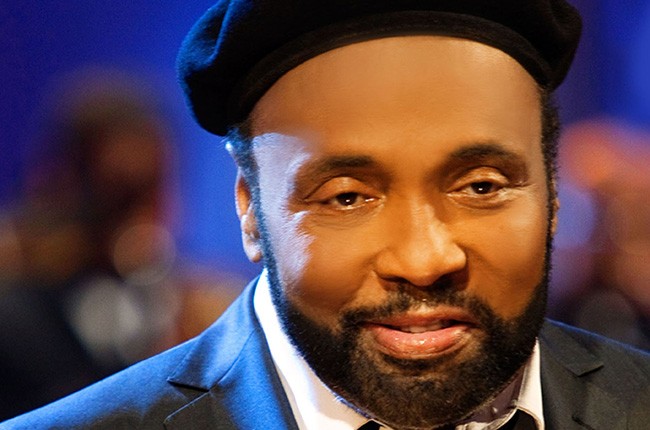 Without further ado, the best contemporary worship music songwriter of all time is Andraé Crouch. Beginning in the mid-60’s, Crouch, the son of a pastor, began combining the joyous sounds of traditional gospel (even then much closer to the mainstream thanks to the work of Thomas A. Dorsey and others a few decades prior) with the sophisticated Sound of Young America coming out of Detroit and the hard-driving soul coming from the south, the two primary African-American contributions to pop-rock of that era.
 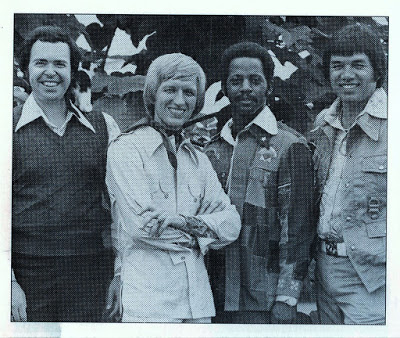 It would not be an exaggeration to use MLK-like adjectives to modify any nouns related to Crouch’s efforts in segregated Protestant America, another reason his contribution to cwm is so significant. In the late 60’s and early 70’s, when the American Church was still feeling the aftershocks of civil unrest in the streets a few years before, Crouch’s Disciples were the first major ccm/contemporary gospel band to integrate racially–and sexually, with women playing equal-footing roles, not relegated to eye candy or background vocals alone–a Christian version of Sly & the Family Stone. A few years later, Disciple Sherman Andrus left Crouch’s band to join The Imperials, more popular in white churches than Crouch’s, who carried a similar mantle, a real rainbow of a group with the African-American Andrus and Hispanic bass singer Armond Morales, as well.
 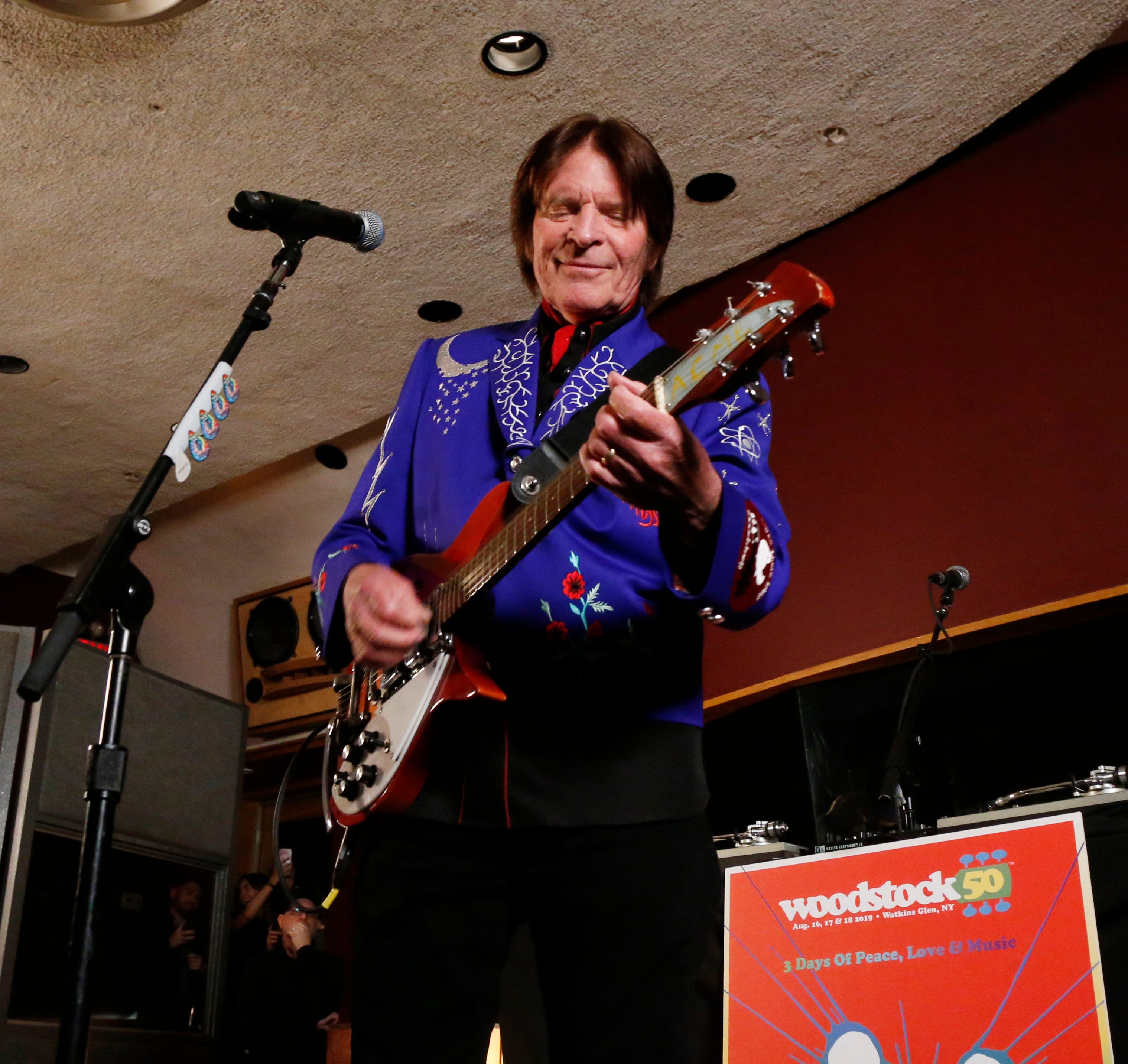 driving force behind the prolific Creedence Clearwater Revival (CCR), purveyors of what is sometimes known as Swamp Rock, for its “Born on the Bayou” overtones. You’ll also hear the progressive verb “choogling” used in reference to the band’s energetic boogie grooves, heard here in such Fogerty-penned classics as
 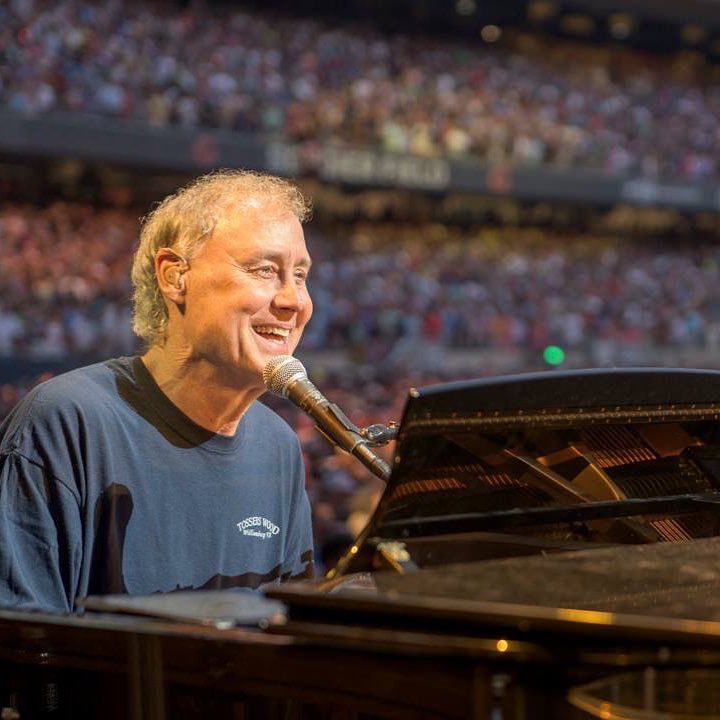 As America continues to find its way forward, in fits and starts, following the summer of 2020’s racial unrest, it’s perhaps timely to lead off this week’s look at songwriting expertise with Bruce Hornsby’s
  We pick up with an artist some would consider a one-hit wonder, but, oh, what a hit it was. Suzanne Vega’s
  Dr. Karin Anderson Abrell is a former psychology professor, a terrific author and speaker, and my sister, so I’m stupid biased when I say she offers great things to anyone in any circumstance related to relationships. She has a complete-package social-media world encompassing numerous platforms under the general umbrella of Love & Life, including a Monday podcast. She writes, “On Love & Life we explore research methods for happy, hopeful, positive living. I delve into all the good stuff–how to have true intimacy in romantic relationships, more meaningful friendships, healthier family connections, and more fulfilling careers.” You can access all of Karin’s materials at her
  Matt Calio serves as the worship pastor at Crossview Church (EFCA) in DeKalb, IL. I’ve known of Matt all his life, as his mom and I were at Judson together in the 80’s, but I really came to know and appreciate his deep thoughtfulness regarding the Christian faith when he came to JU, and he has continued his lifelong learning via his current pursuit of a master’s at Denver Seminary. His podcast, called Bible, Books & Culture, airs every Friday. Of the podcast, Matt says, “Our tag line is ‘seeing the grace of God in our literature and lives,’ so our hope is whether we’re reading a book, talking about our lives, or engaging in the world around us, we’ll be able to point out the grace of God in it all.” You can access the podcast at
  I have worshiped under numerous worship leaders, and I’ve had the distinct privilege of helping to train many others who are truly excellent. That said, if I could be led in worship by only one person, it’d be Aaron Niequist. Raised low-Church evangelical, Aaron encountered high-Church liturgy in his late 20’s and 30’s, and it changed his life, a process eventually leading to his writing the excellent The Eternal Current, upon which his podcast is based. He writes, “Even if your faith container seems to be failing, don’t give up. You may give up on certain versions of religion, but let’s learn how to enter more deeply into the way of Christ.” Aaron’s big-tent, both/and approach to worship is refreshing, and you can access the podcast and a bunch of other resources
  The final podcast entrepreneur, Sarah Reynolds, was a student in Communication Arts, one of Judson’s most eclectic majors, so it’s no surprise that hers in the most idiosyncratic, perhaps, of all the offerings here. Her brand-new
  But if I had to choose only one author whose work I’d want to have with me on a desert island, it would be
  remembrance, in light of recent national events, provokes interesting social commentary, to be sure, given King’s penchant for non-violent responses in the face of aggressive resistance to the pursuit of justice. To whatever extent it’s true that “silence is violence” (a fascinating discussion for another day, assuming one is willing to engage in dispassionate, heuristic dialogue), newspaper op-eds and the various spheres (Twitter-, blogo-) of social media are rife with pacifists, such is the significant volume–quantity and loudness–of the commentary these days.
 But the “might” to which Shurtleff alludes is what the brilliant theologian Robert Farrar Capon refers to as “left-handed power,” in his theology of Christ’s parables: Kingdom, Grace, and Judgment:
 If there’s anything I had reinforced in 2020 it’s that all-or-nothing approaches don’t tend to be helpful (for most non-emergency matters) in the midst of a prolonged disruption to the status quo. A writer who is a bit more nuanced in his concerns for current worship trends is longtime worship trainer
  We celebrated the blessed end of a really difficult semester this past Saturday in the Demoss Center for Worship in the Performing Arts at Judson University. (OK, we really celebrated Christmas, as is our wont in early December, but this year it certainly felt putting 2020 to bed for good earned a silver medal where reasons to be festive were concerned.) I offered up a few reflections at the beginning of the worship concert, and I thought they might bear repeating here. I pray they will be a blessing to you.
 Emmaus Road Worshipers